PAPO Optical System, Perfect Flat-field Apochromatic Correction
Fast Focal Ratio, Near-diffraction-limited Round Star Points
Fast Focal Ratio, Near-diffraction-limited Round Star Points
Paramètres du produit
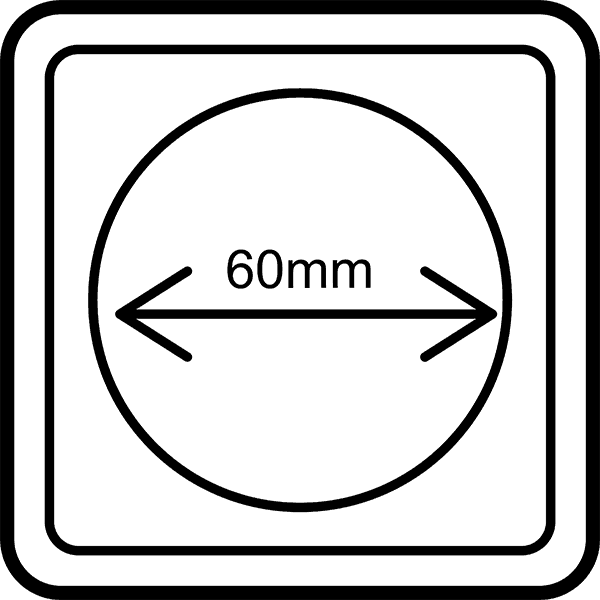
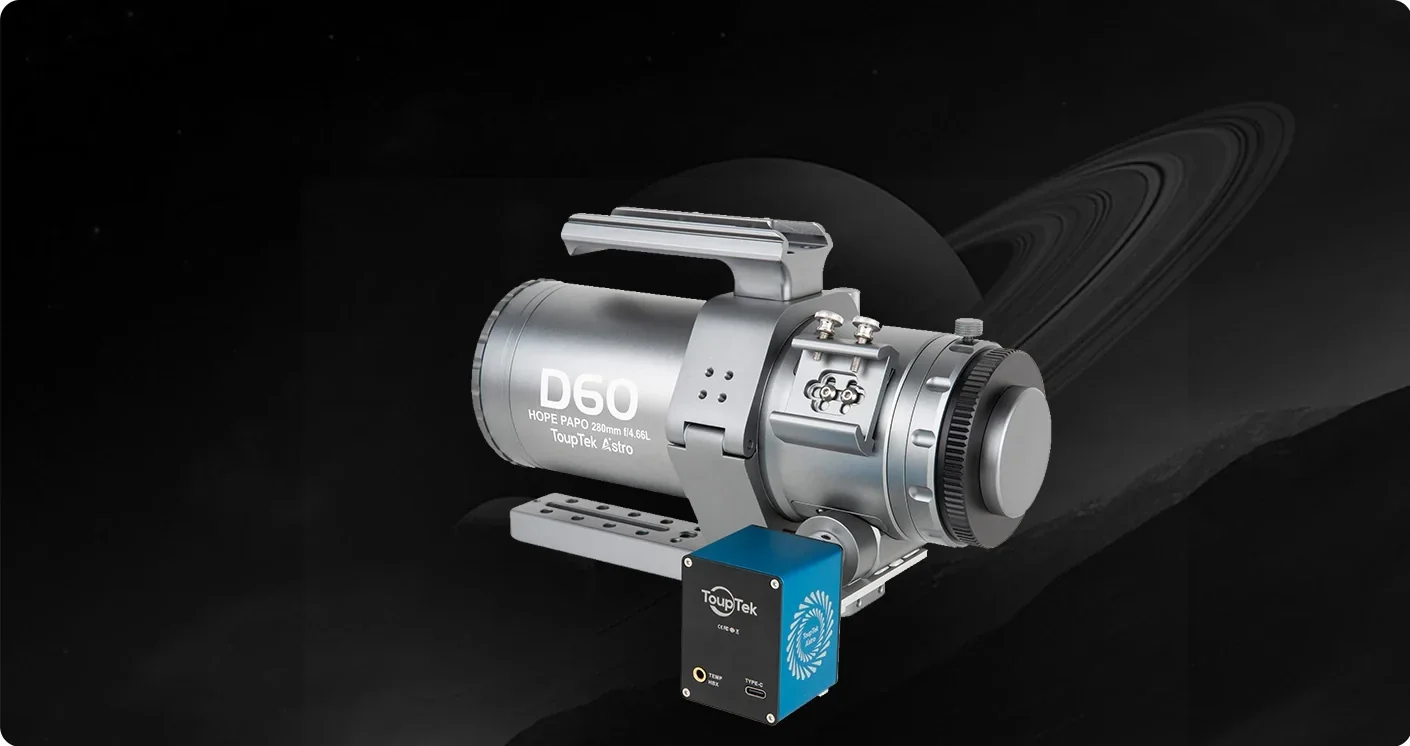
Effective aperture 60 mm
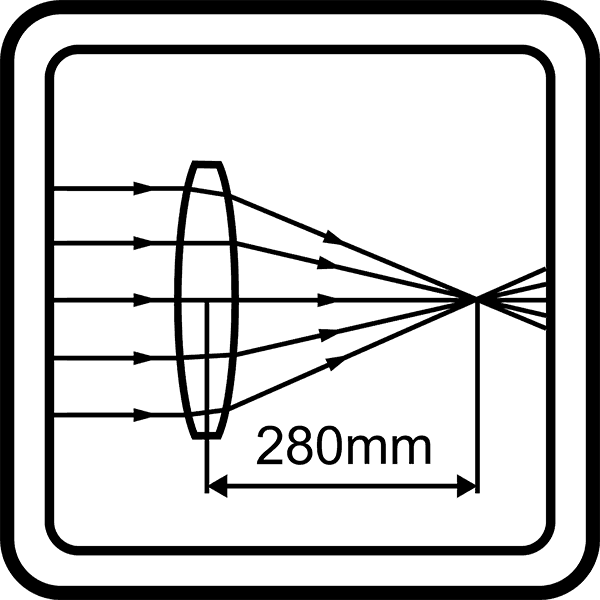
Focal length 280 mm
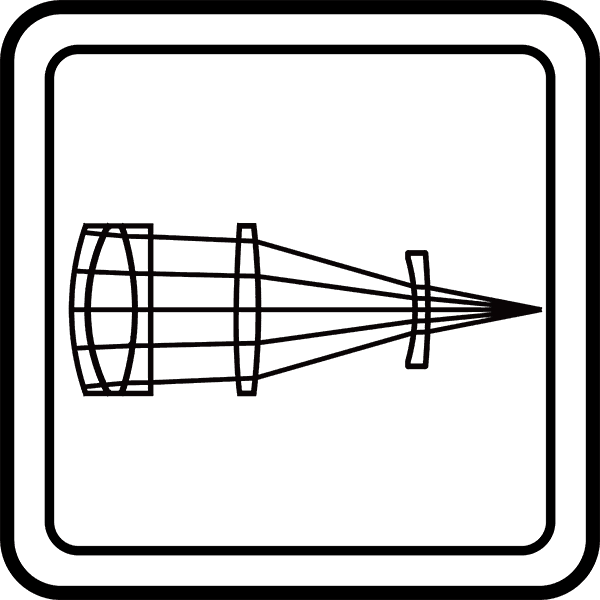
5-element apochromatic design
Full-frame coverage
Central star RMS radius less than 1.1 µm

Built-in field flattener, integrated design reduces adapter
instability
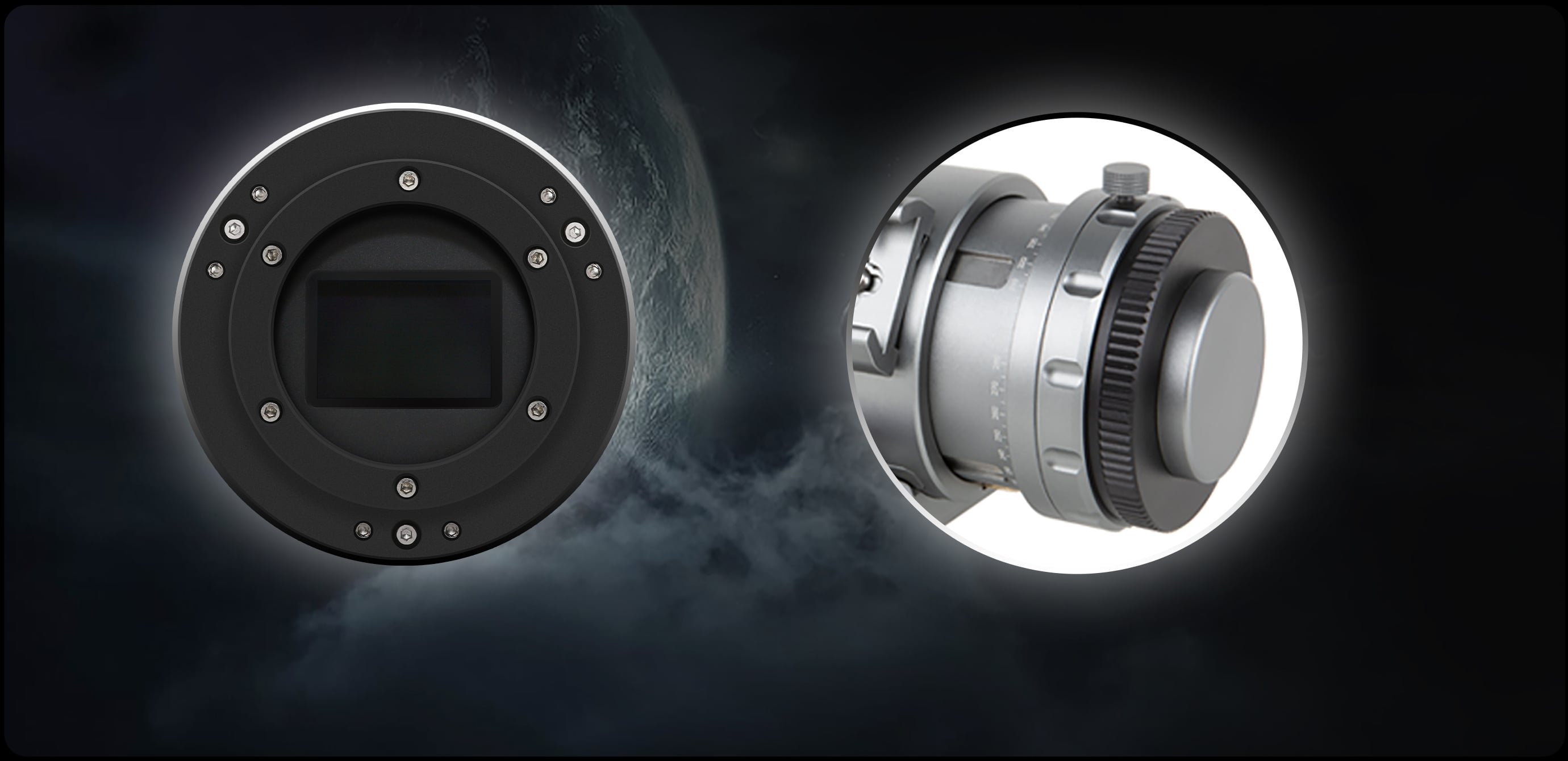
Built-in retractable dew shield

3-inch rack and pinion focuser with scale
Dual interface

1:10 precision focusing
6 avantages du HOPE D60
-
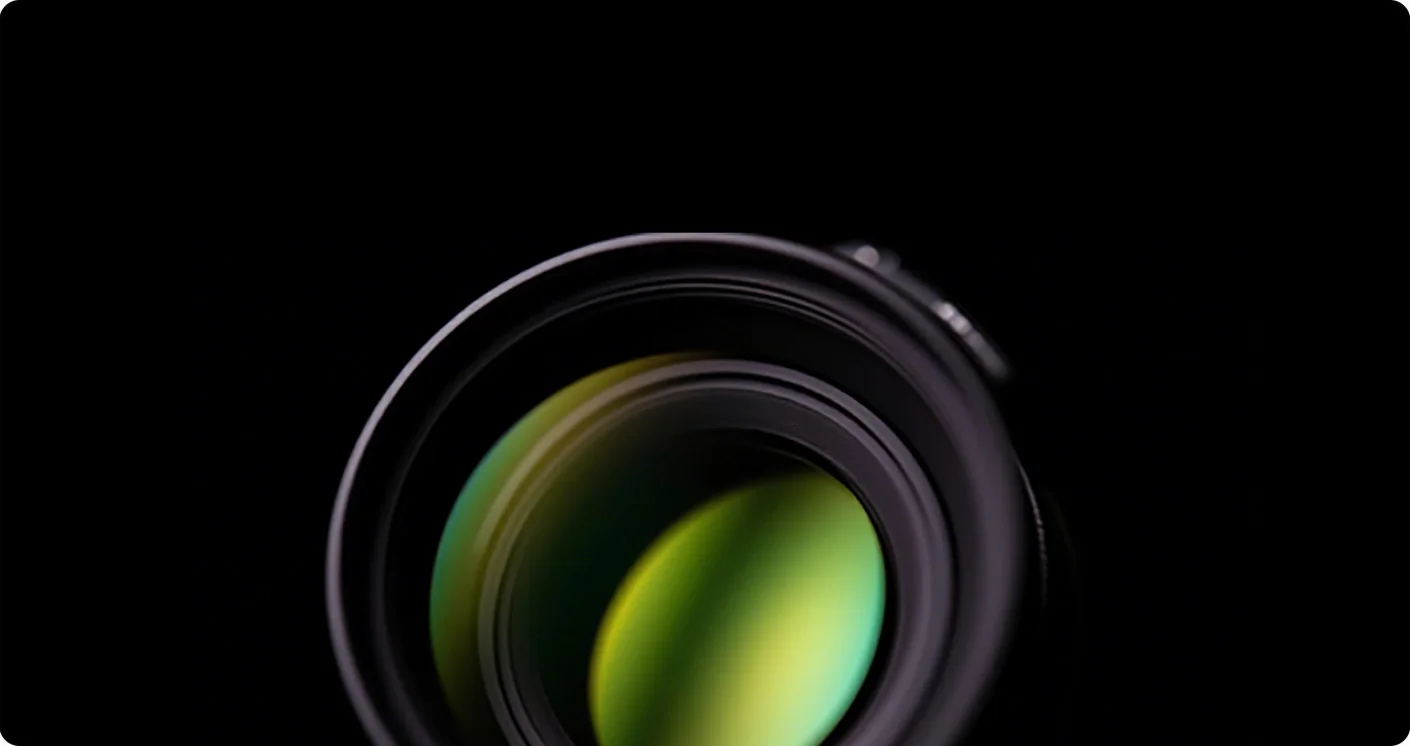
Optique proche de la limite de diffraction
-
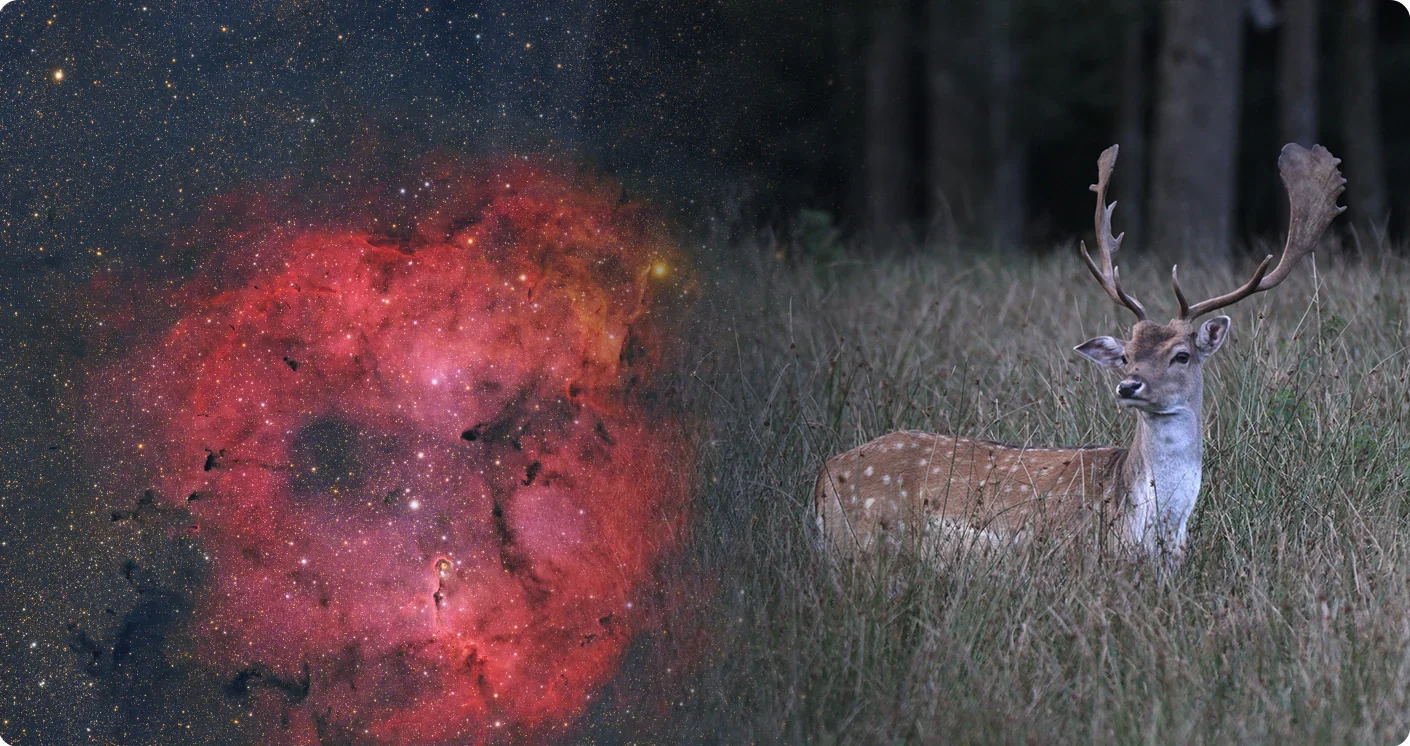
Usage polyvalent
-
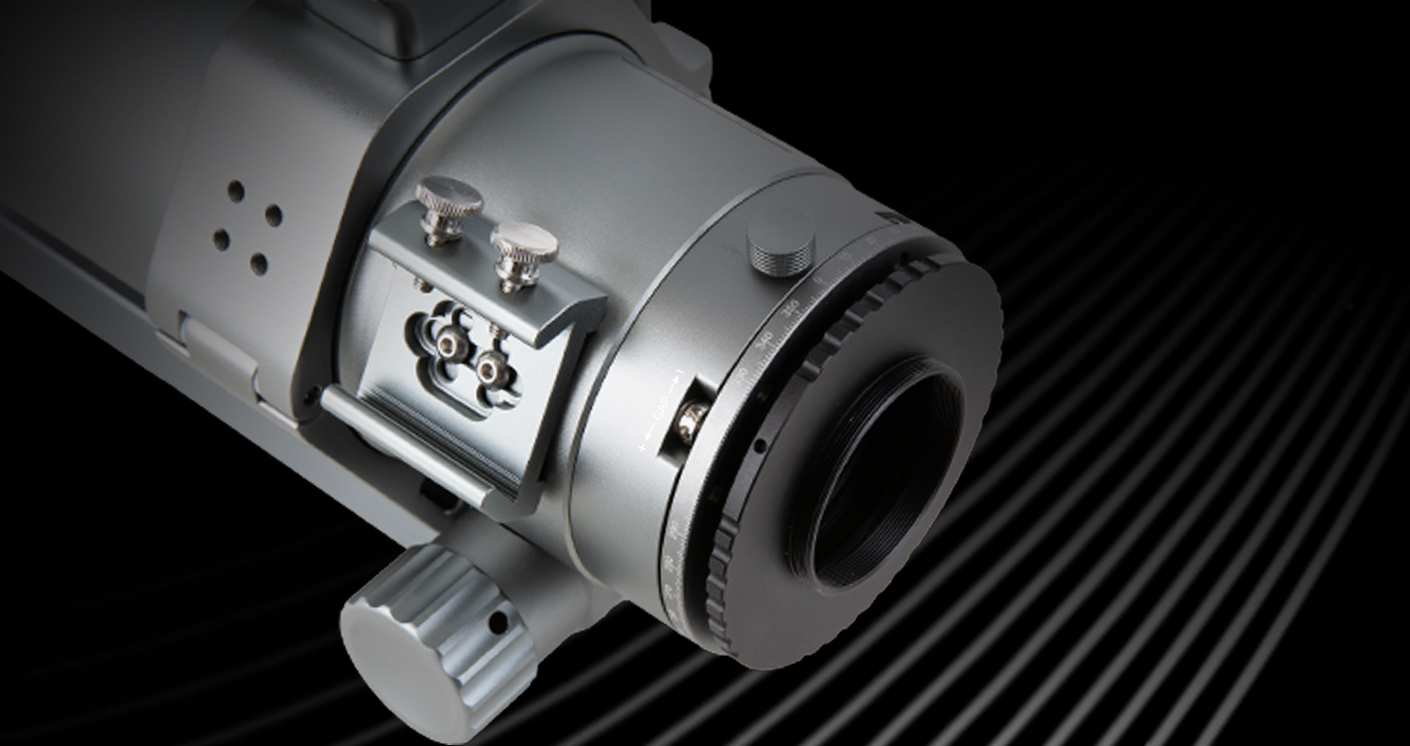
Conception mécanique précise
-
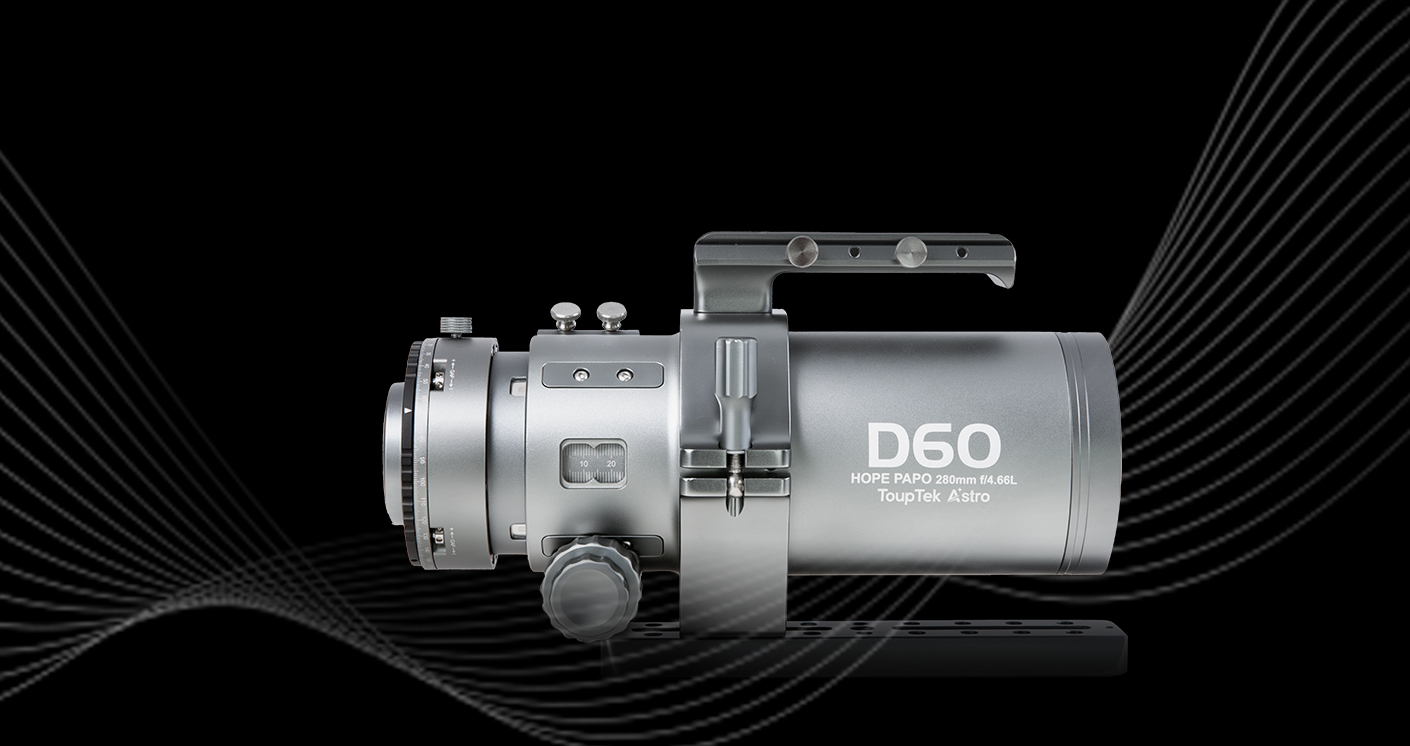
Tube optique compact et robuste
-
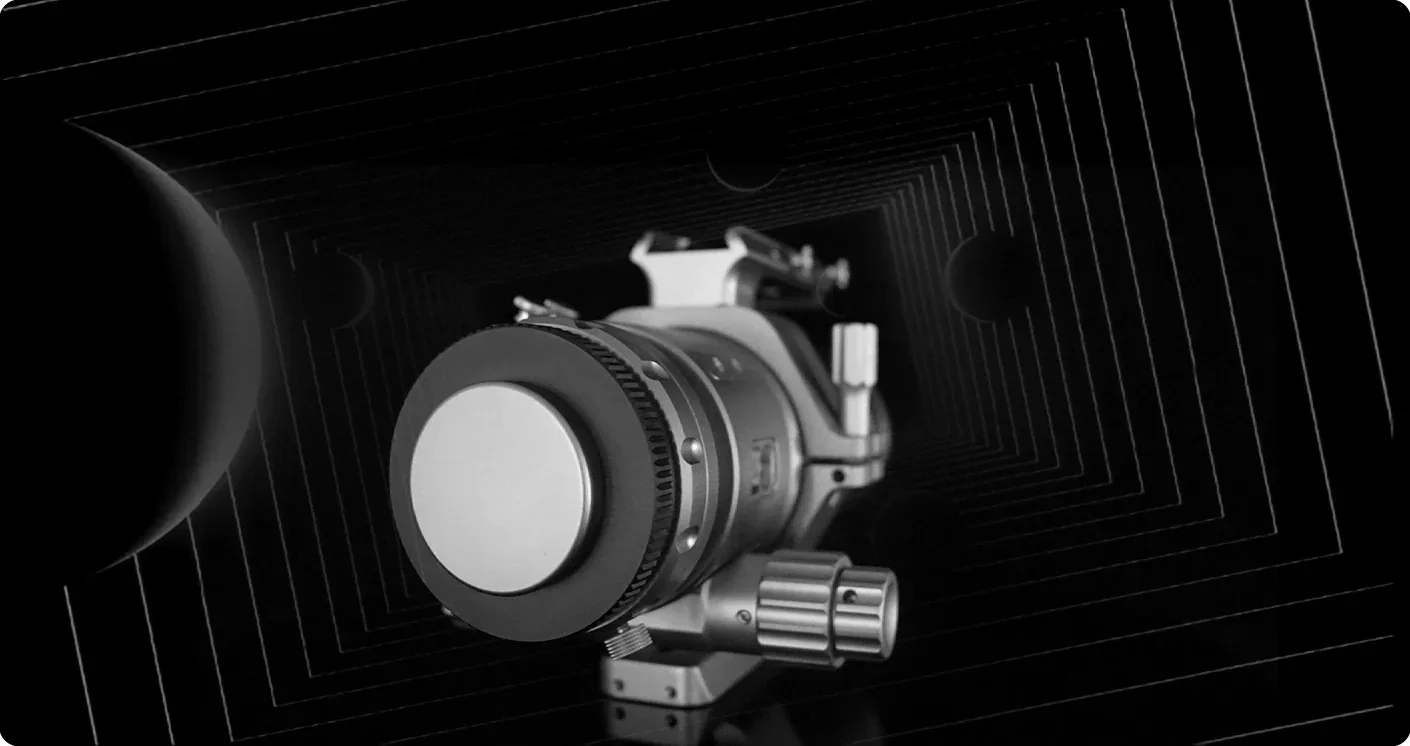
Interface hautement compatible
-
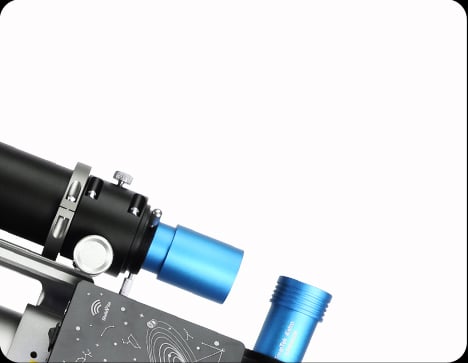
Compatible with focuser électriques of Multiple Brands
Excellente Conception optique
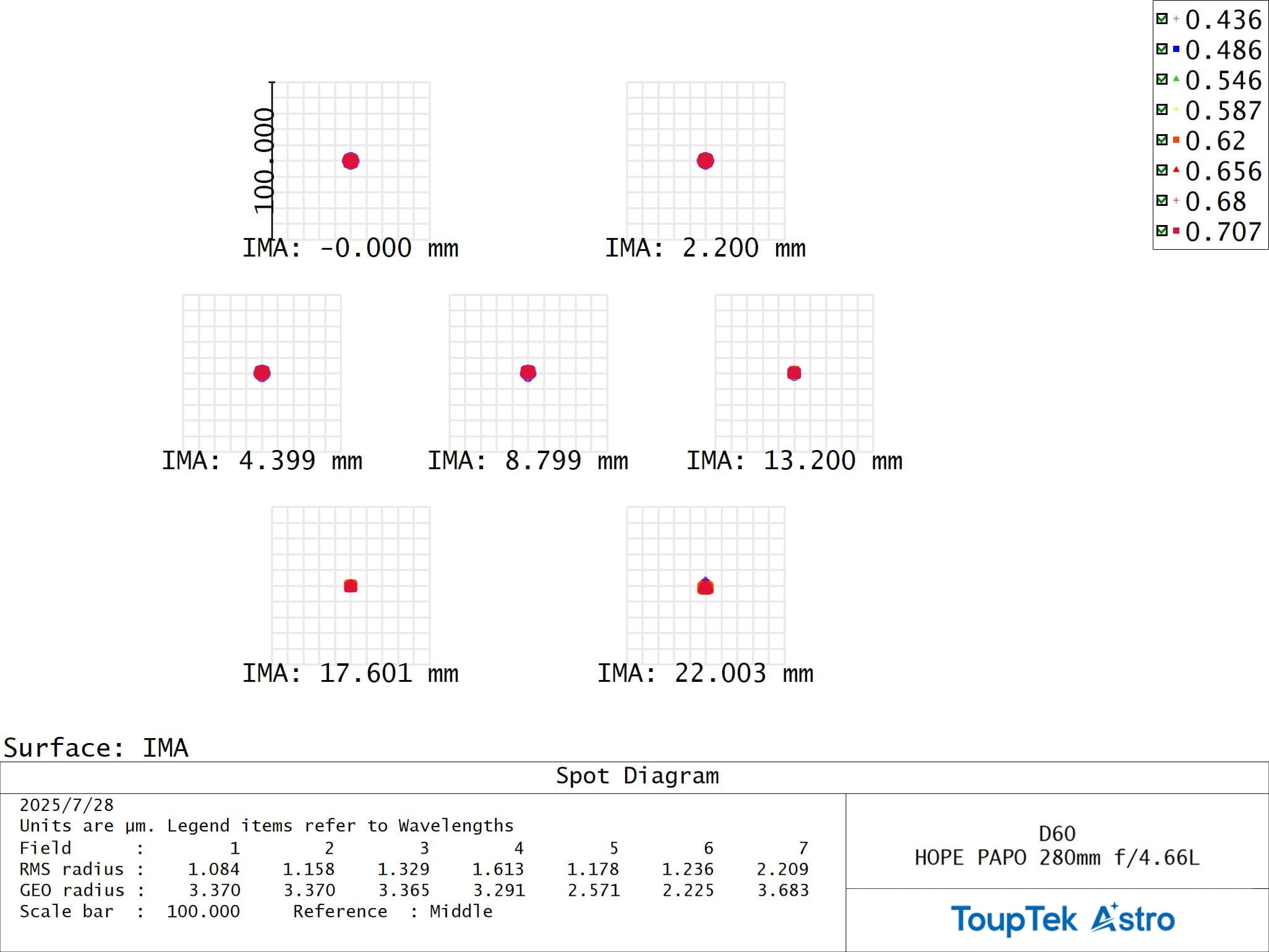
Spot Diagram
High concentration, pinpoint stars near the theoretical limit
- All spot diagrams converge within the Airy Disk, with RMS radius under 1.1µm at the center and 2.3µm at the edge, producing ultra-fine star points.
- The energy of multi-wavelength focal points is highly concentrated, with near-zero chromatic aberration.
Spot Diagram
A spot diagram shows how the light of a star point is distributed on the camera sensor after passing through the telescope.
The spot diagram’s density shows energy distribution, while its size and shape reveal imaging quality. Smaller diffusion (RMS/GEO radius) means higher resolution.
MTF Curve
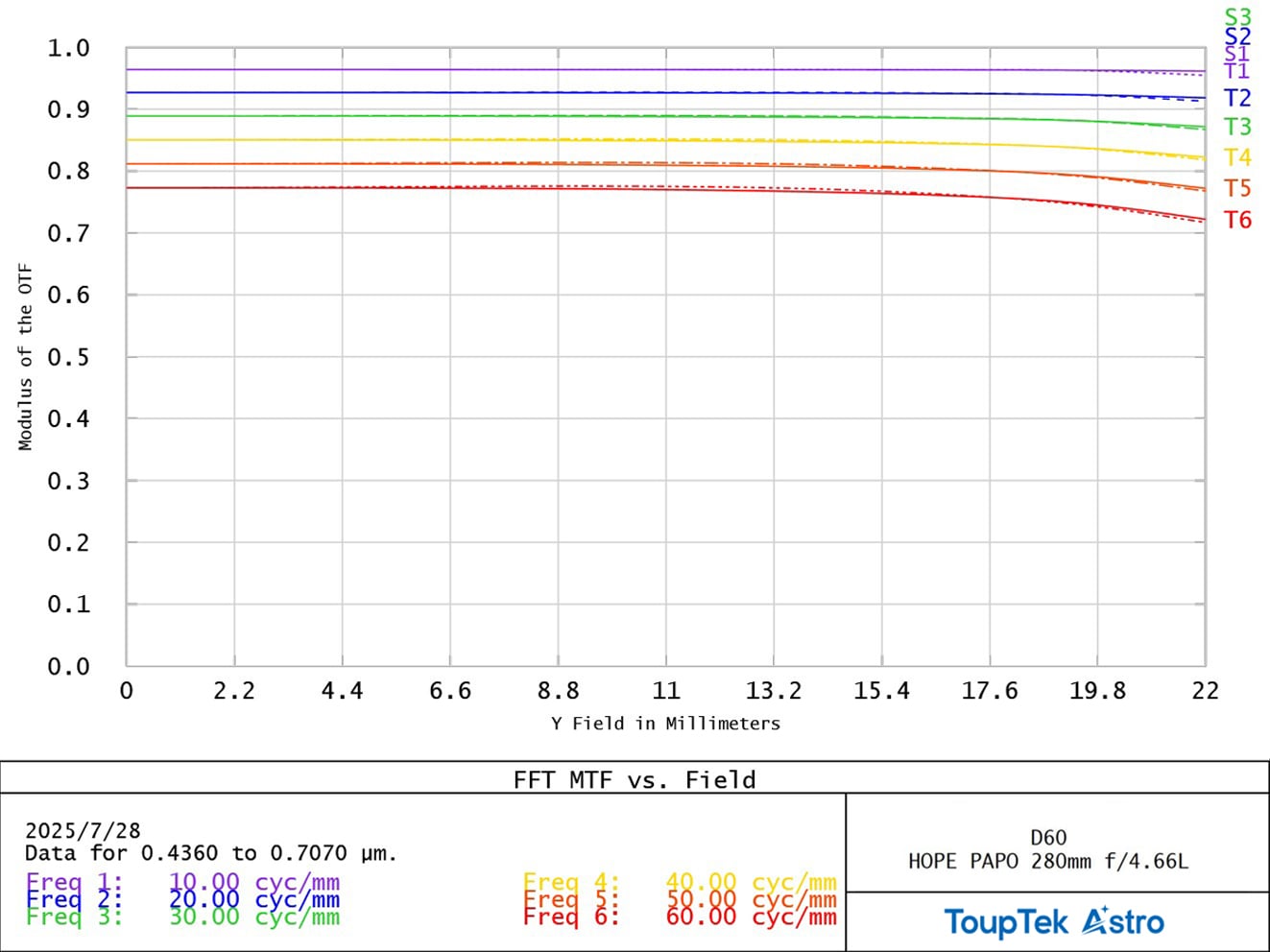
High resolution, accurate celestial detail reproduction
- MTF exceeds 0.95 at 10 LP/mm and stays above 0.85 at 30 LP/mm.
- The curve separation in the sagittal (S) and tangential (T) directions is minimal, indicating excellent astigmatism control.
FFT MTF vs. Field
The Modulation Transfer Function (MTF) measures an optical system’s ability to render detail, clarity, and contrast. The FFT MTF vs. Field curve shows how performance changes across the image field.
A higher curve (closer to 1) at 10 cycles/mm indicates better contrast and clearer imaging.
A higher curve (closer to 1) at 30 cycles/mm indicates higher résolution et sharper imaging.
A flatter MTF curve means more consistent image quality from center to edge.
Longitudinal Aberration Curve
Apochromatic design ensures pure and true colors
- Aberration in the 436nm to 707nm wavelength range is less than 0.05mm, demonstrating excellent chromatic aberration control.
- The aberration curves for different wavelengths are flat and closely spaced, indicating high consistency in axial aberration.
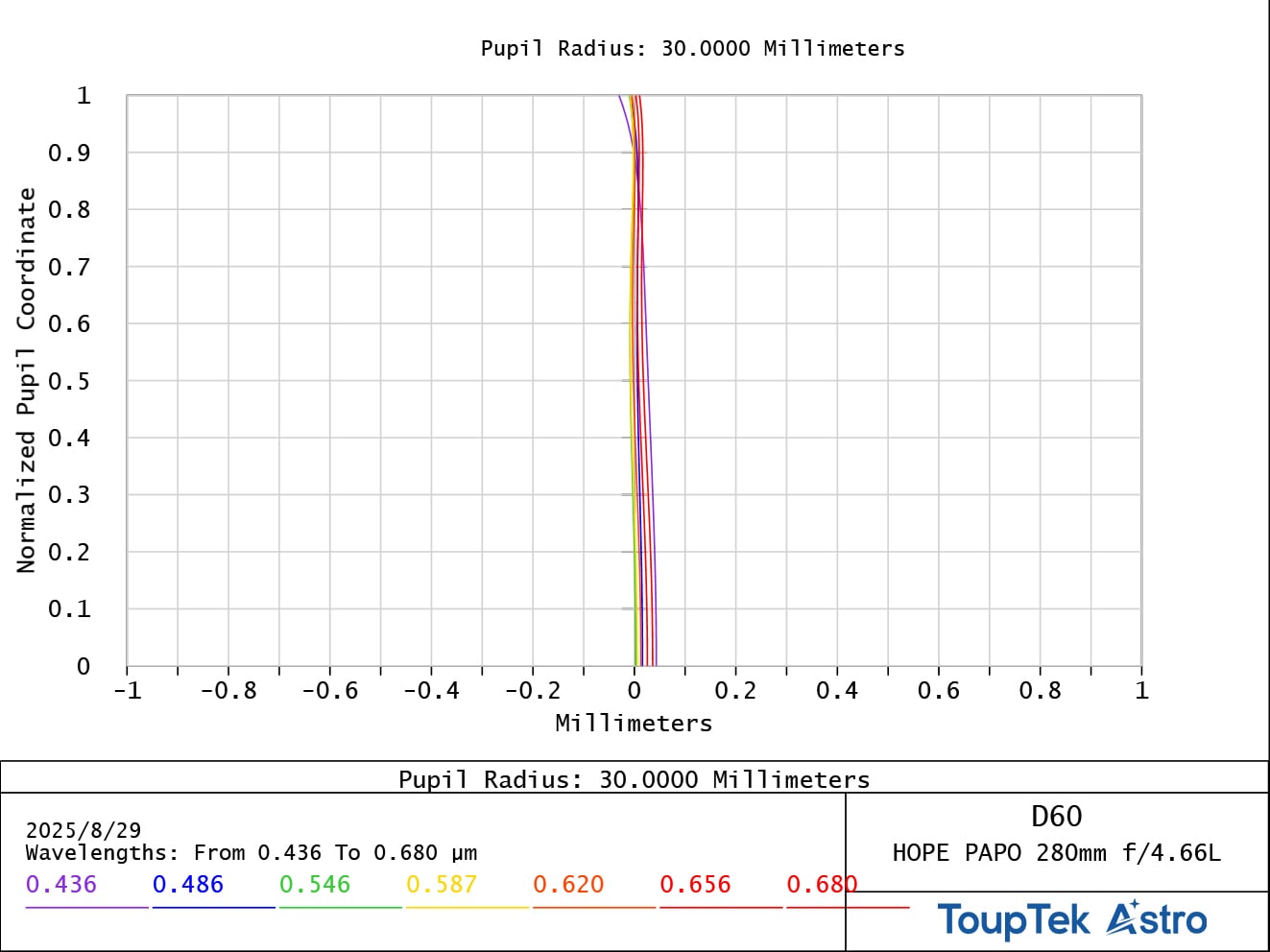
Longitudinal Aberration
The longitudinal aberration refers to the deviation in focal point positions along the optical axis for different wavelengths of light, caused by the inability of various wavelengths to converge at the same focal point after passing through the optical system. It primarily reflects the distribution of spherical aberration and axial chromatic aberration, visually illustrating the longitudinal shift of focal points under different wavelengths and pupil positions.
Relative Illumination
Even brightness, no more edge vignetting
- The relative illumination at the 44mm full-frame edge is >90%.
- The relative illumination curve shows minimal variation across the entire field, with smooth attenuation and excellent uniformity in illumination distribution.
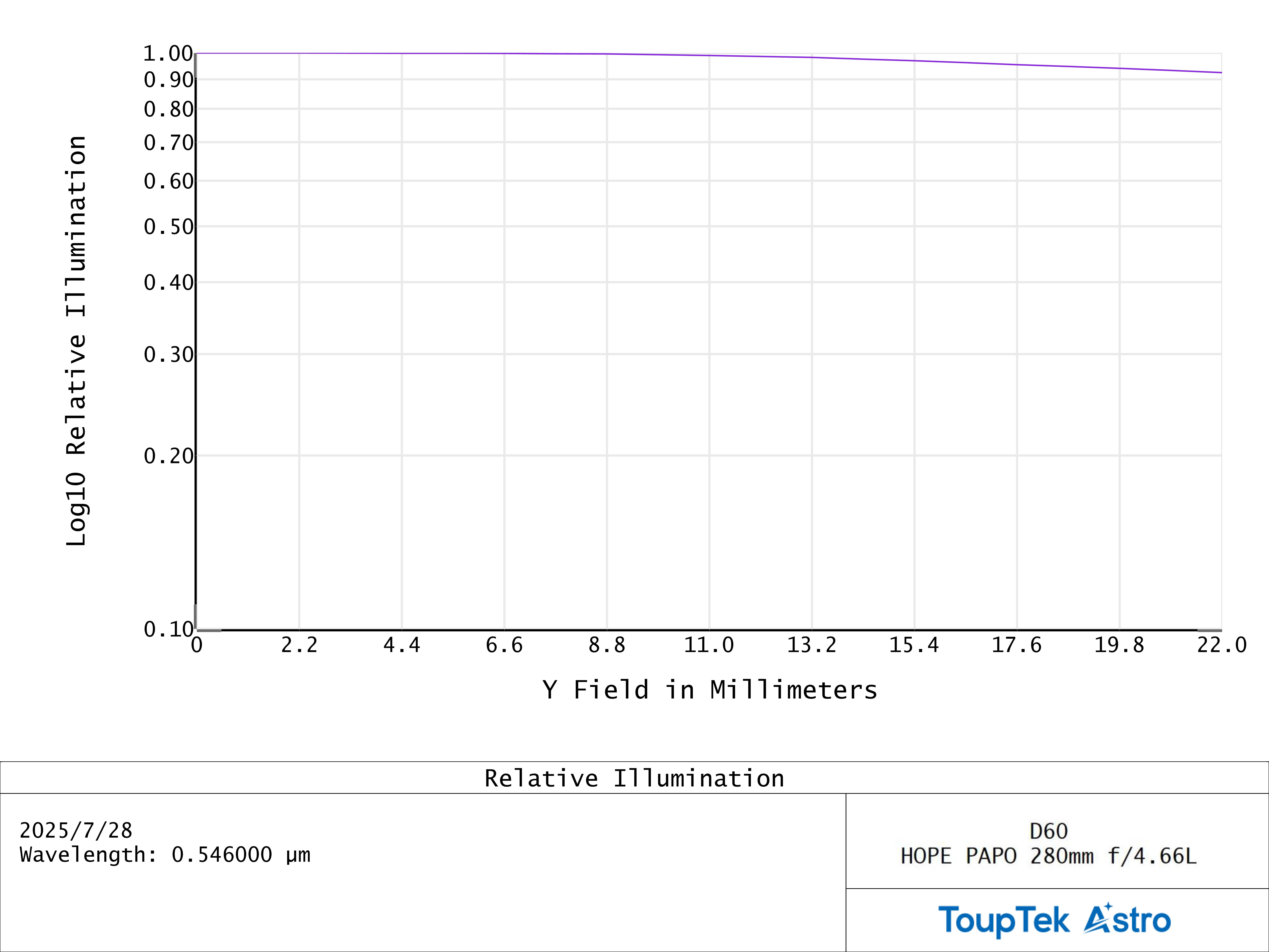
Relative
Illumination
Relative illumination est une metric for the uniformity of illumination on the image plane in an optical system. It describes the degree of brightness falloff from the center to the edge of the image, typically expressed as a percentage or ratio relative to the central illuminance.
Native Flat-field Design
Full-frame coverage
Entire star field
sharp and clear
- The native flat-field design corrects for field curvature, ensuring pinpoint focus for stars both in the center and at the edges, resulting in clearer image quality and more rounded stars.
- This built-in field flattener design significantly simplifies
the imaging workflow. There is no need to calculate complex back-focus distances or
purchase an additional field flattener. Easy focus is achieved within a 50-58mm
connection distance (55mm recommended).
Note: Because the telescope's focal plane position and working distance have been precisely engineered, the use of a star diagonal for visual observation is not recommended.
Structure mécanique précise
-
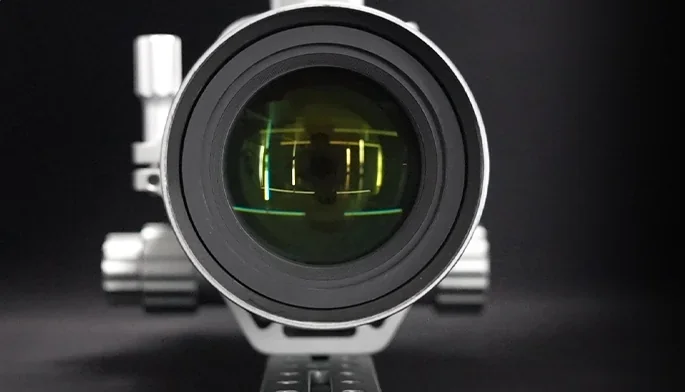
- Made from high-strength aluminum alloy, precision CNC-machined for resistance to vibration, temperature changes, and deformation. Prevents subtle shifts and maintains imaging focus for stable results.
-
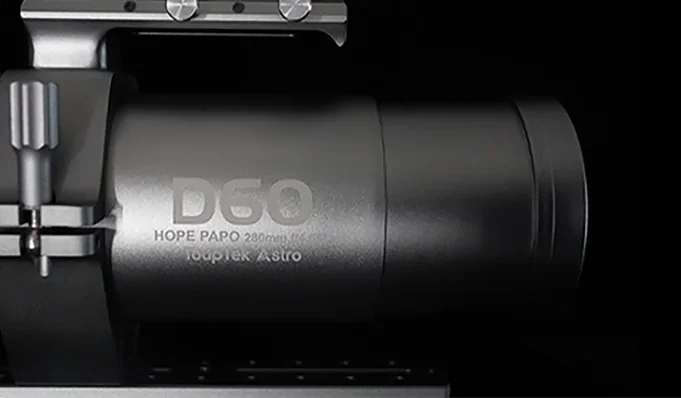
- The interior lens tube features a blackened treatment to effectively suppress stray light, ensuring clean and clear images.
- A retractable lens hood blocks stray light interference and improves image contrast and uniformity.
- The magnetic positioning allows for a one-second and secure attachment. When retracted, the overall size is reduced for improved portability.
-
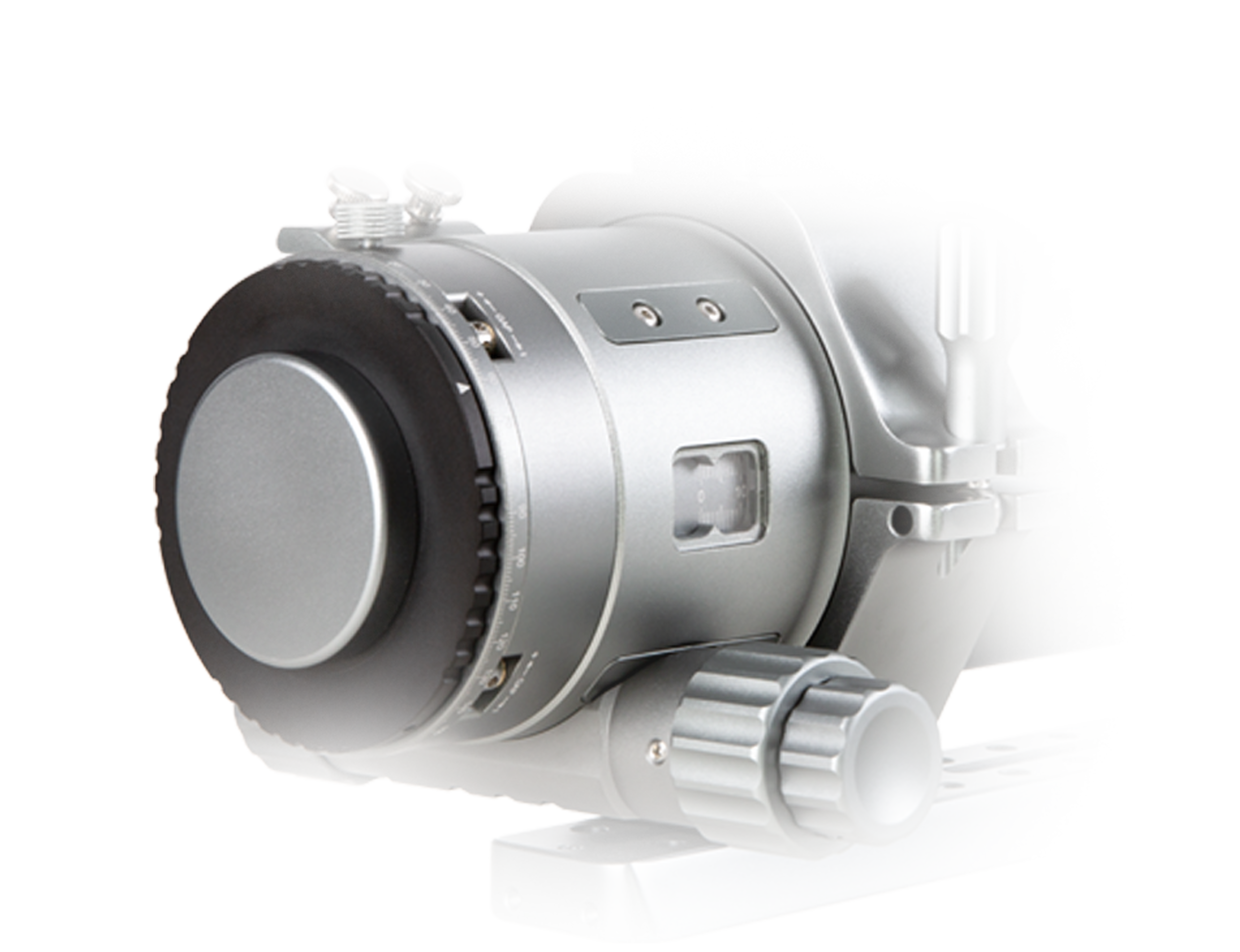
- The 3-inch focuser with a 30mm travel allows for both coarse and fine adjustments. Manual focusing or using an electric focuser is precise with no backlash.
- A focus position window with a clear scale ruler allows quick determination of focus position and improves efficiency.
-
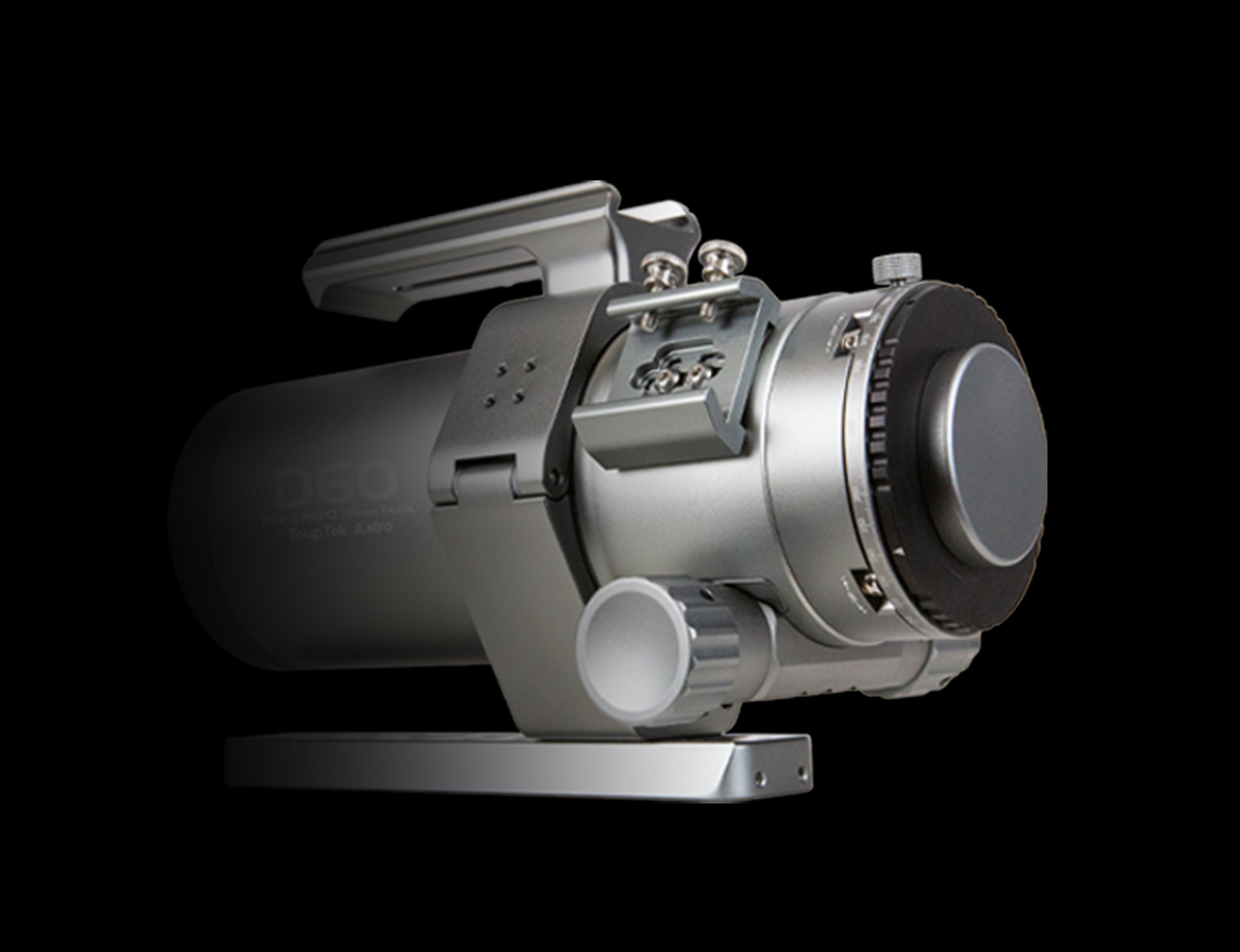
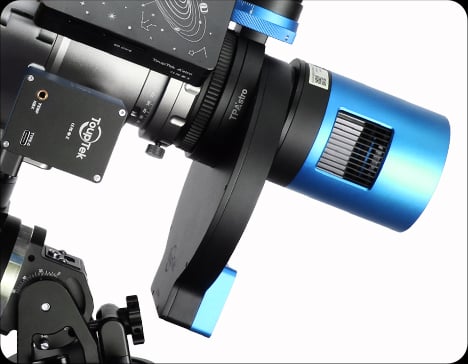
- The camera angle adjuster enables 360° rotation without disassembling equipment, enabling easy and flexible framing.
-
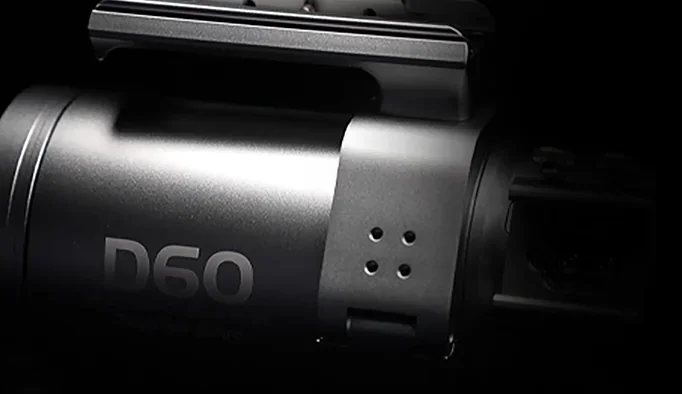
- The multi-function handle supports the connection of diverse accessories for expanded capabilities.
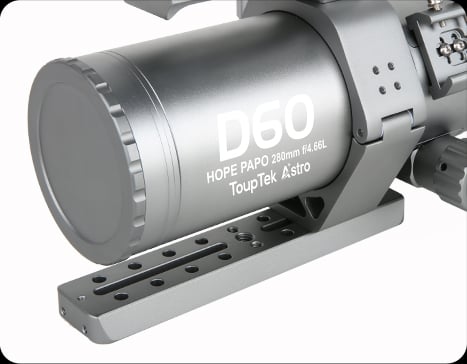
- Built with an integrated dovetail bar and pre-drilled side slots, the OTA offers stable support and effortless accessory integration, unlocking the full expansion potential.
-
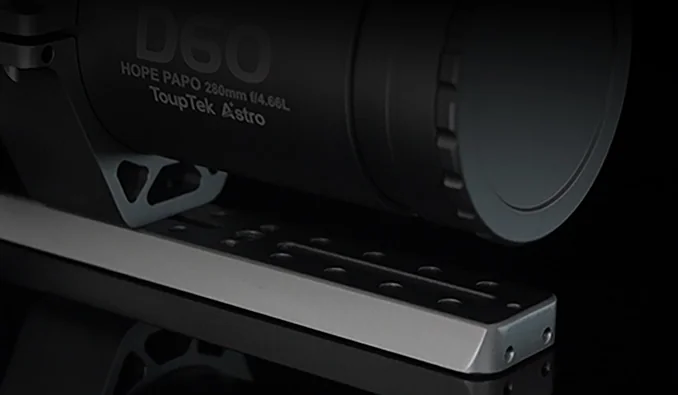
- The base is embedded with a riser block and features multiple positioning slots. A VIXEN-style dovetail plate adapts to various equatorial and alt-azimuth mount systems. The central 3/8" threaded hole can be converted to a 1/4" threaded hole using the included accessories, enabling application in more scenarios like landscape and lunar photography.
-
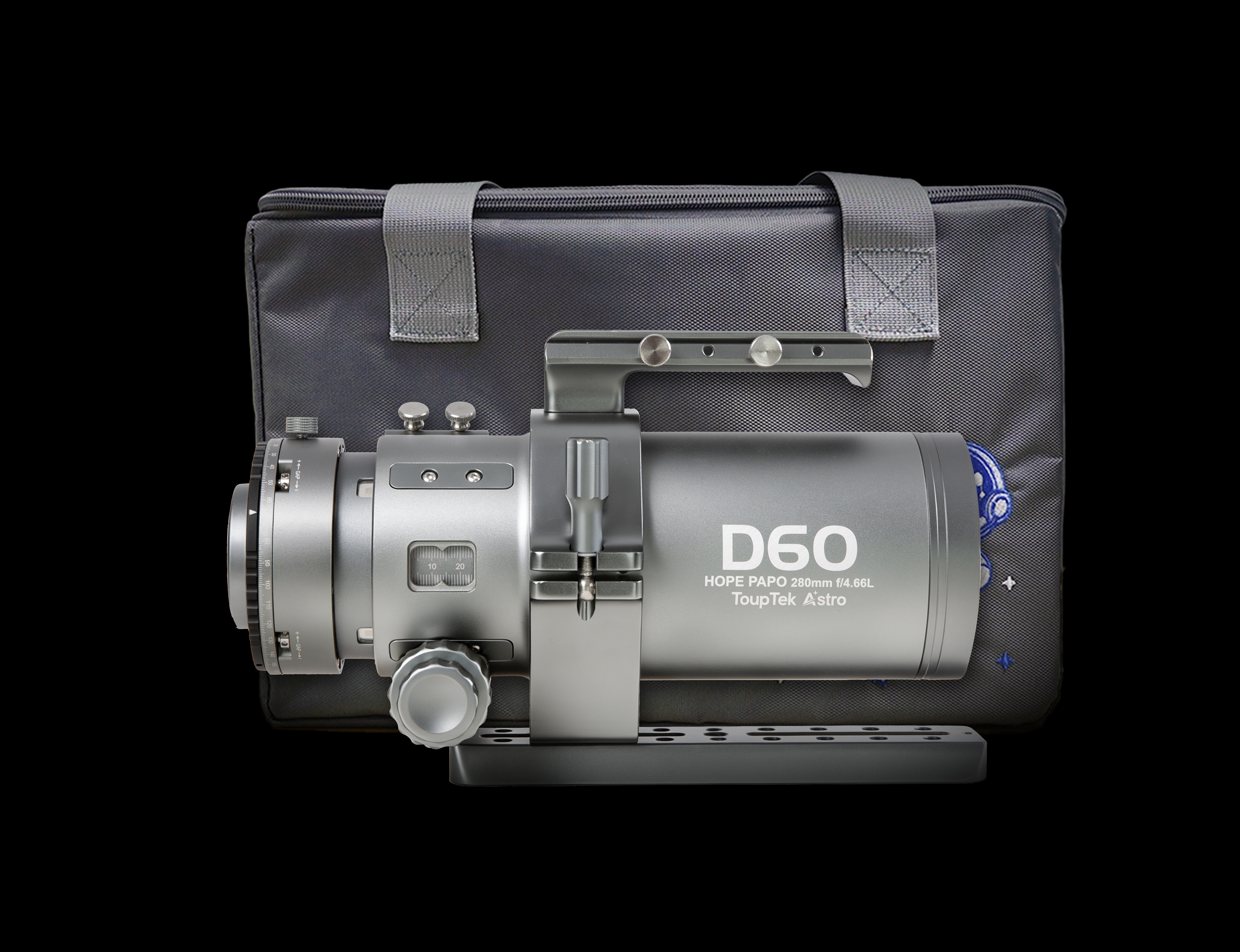
- The entire telescope is compact and portable for taking on the go. With the lens hood retracted, it is only 255mm long, allowing it to fit neatly into a bag for easy storage and transport.
Interfaces hautement compatibles
Comes standard with an M48 adapter ring, compatible with different sensor format cameras and various photography accessories. An optional M54 adapter ring est unevailable to meet the needs of larger format photography.
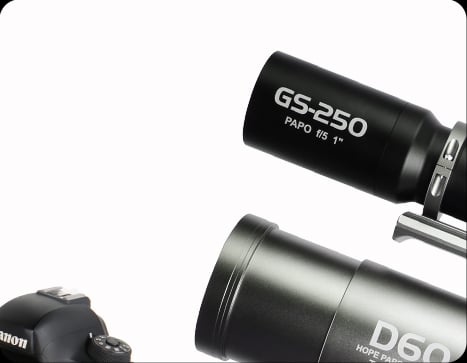
De l’astrophotographie du ciel profond en longue pose à la prise de paysages lointains avec un reflex, le HOPE D60 se montre performant dans tous les scénarios.
Compatible avec plusieurs marques de focuser électriques
La molette de mise au point manuelle est amovible, ce qui facilite l’installation et permet une mise au point automatique efficace pour la photographie.
-
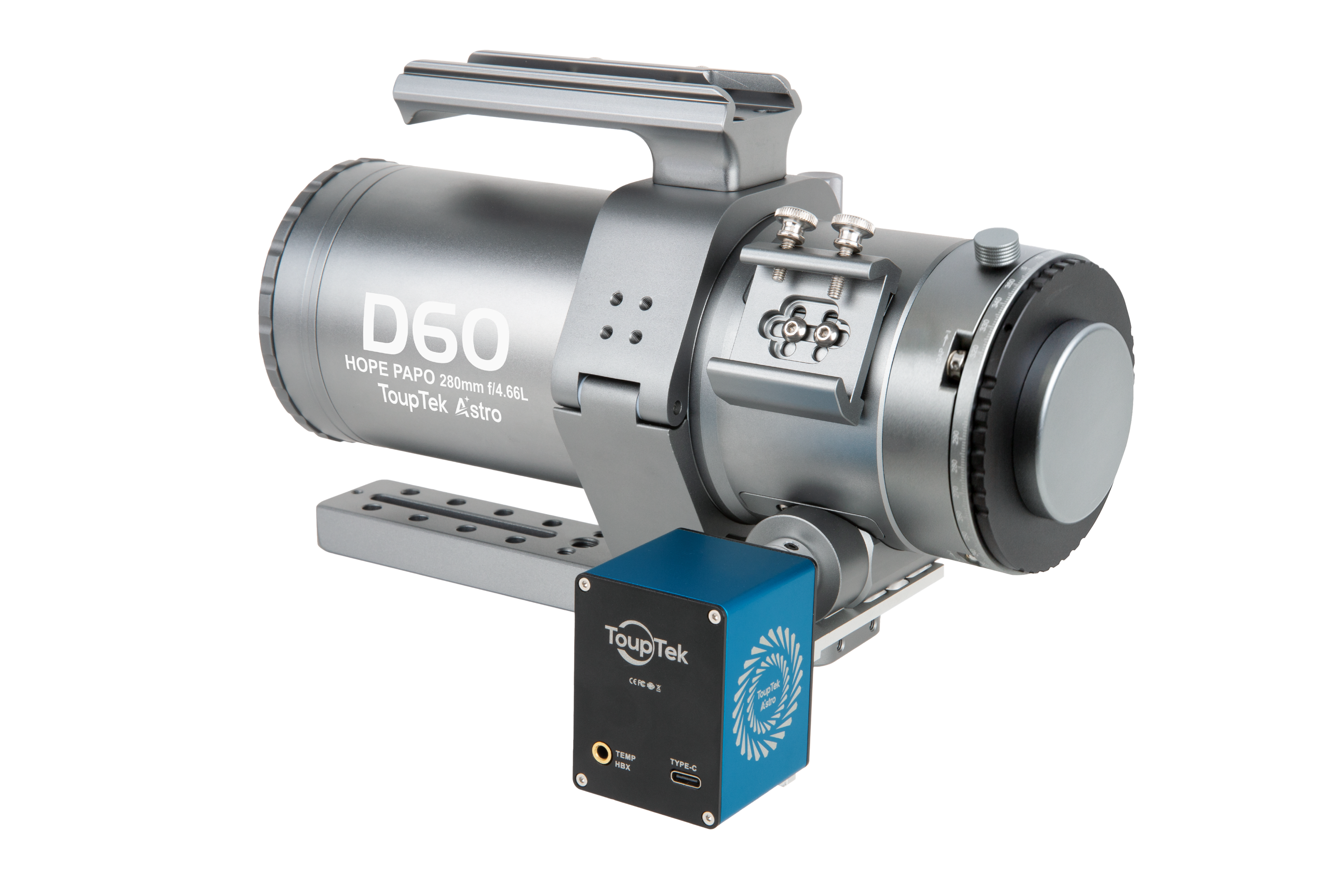
ToupTek Astro AAF
-
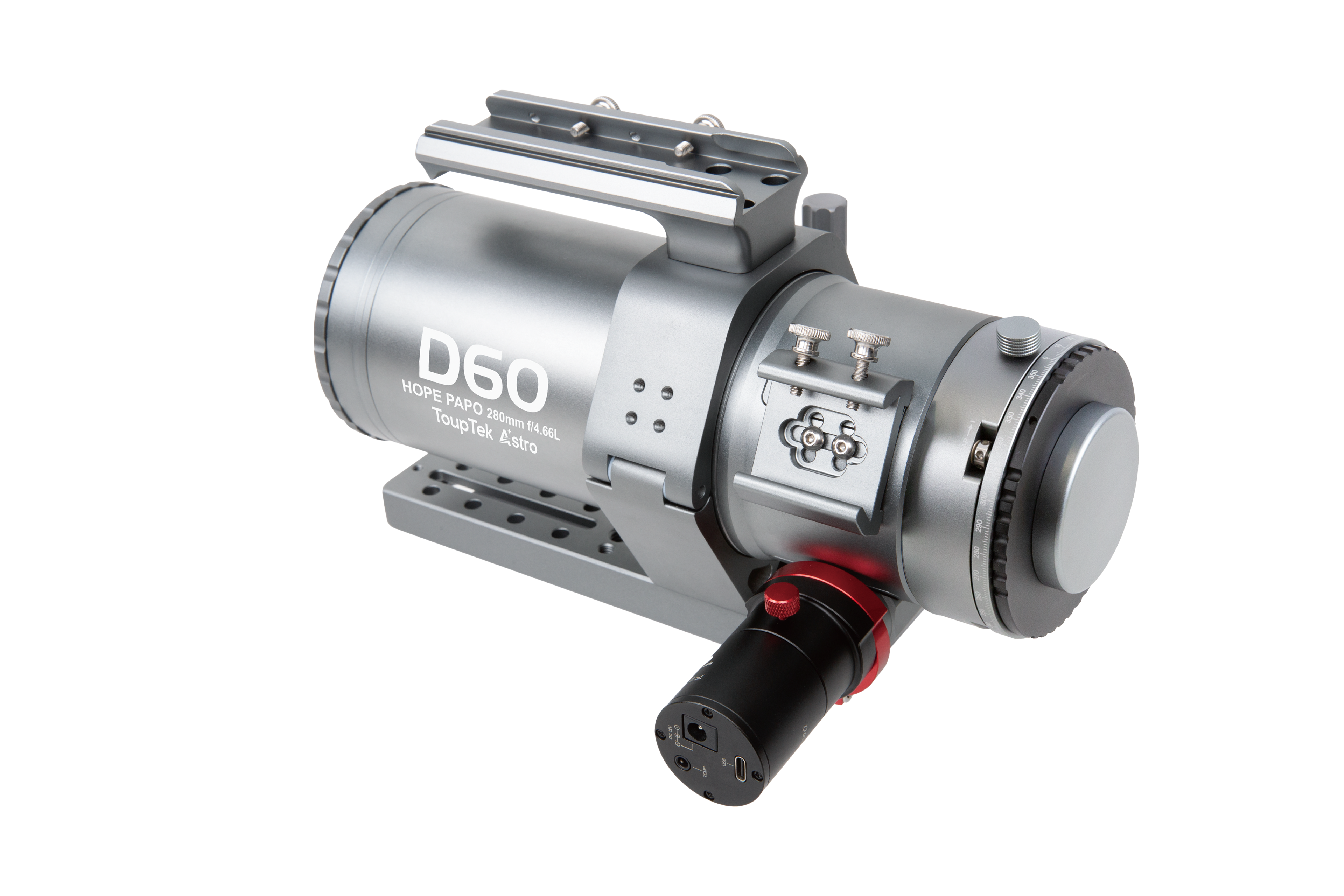
Oasis focuser électrique (Installed with 32mm clamp and A6 gear)
-
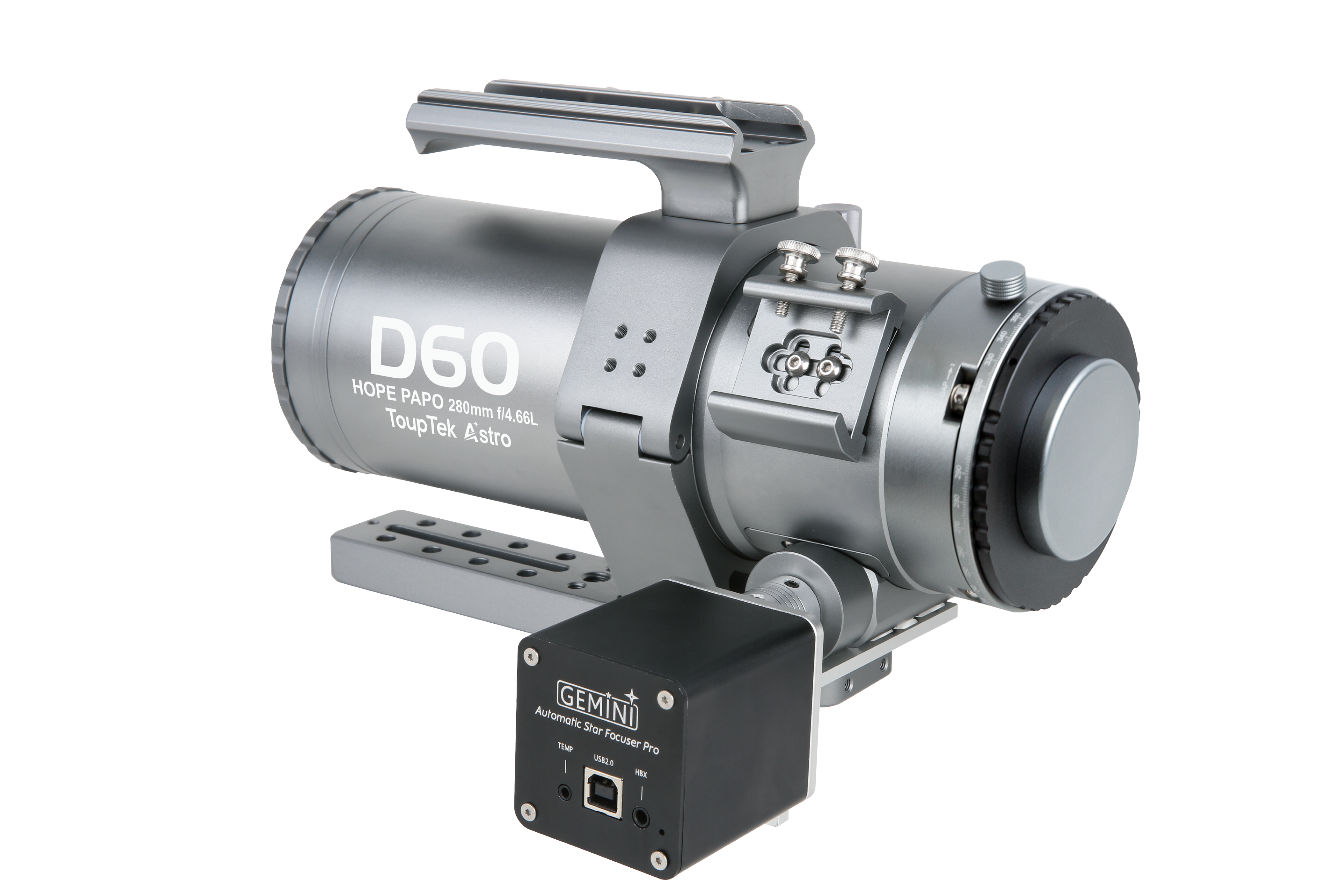
GEMINI focuser électrique
-
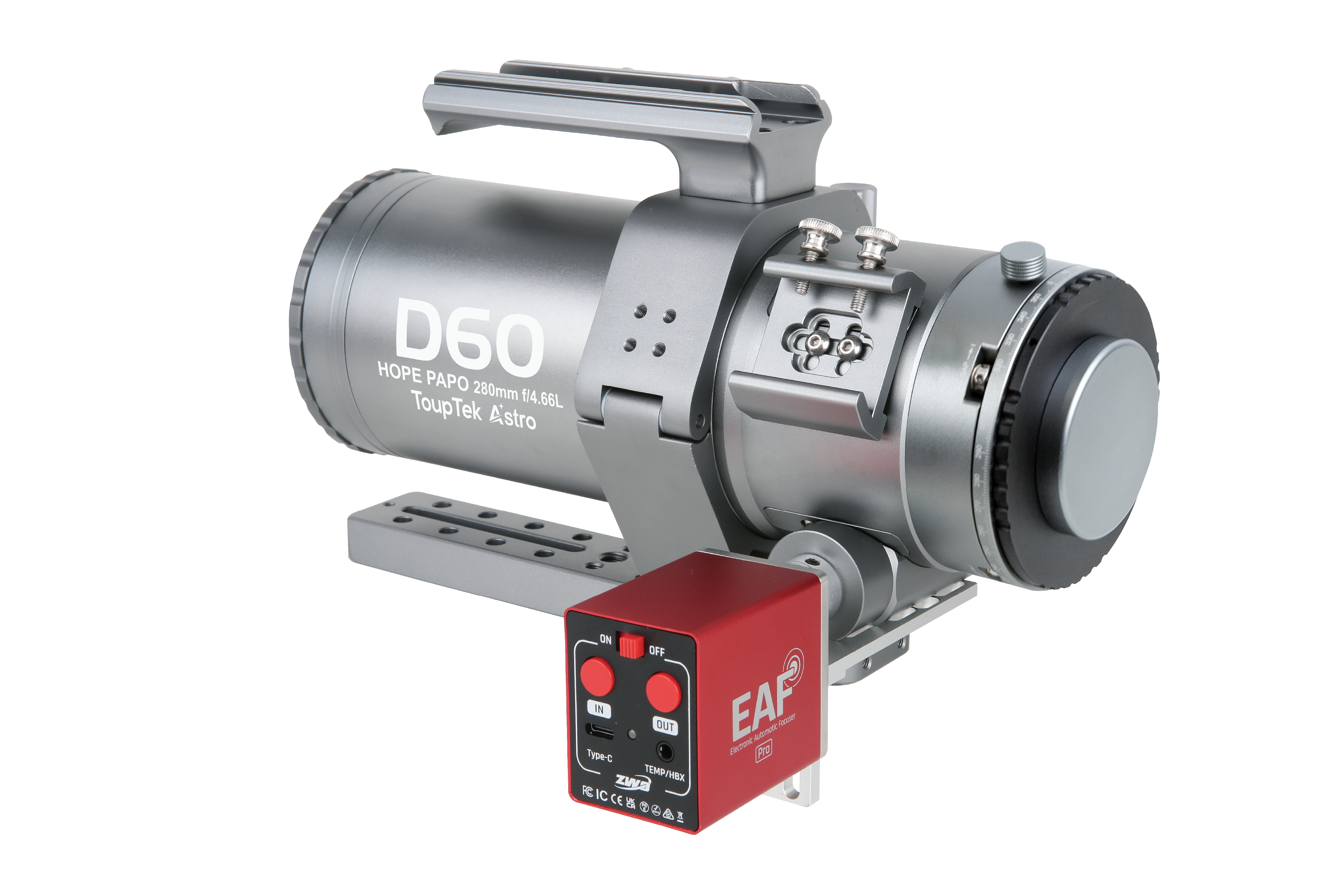
ZWO EAF
Usage polyvalent
Aucune limite pour l’exploration astronomique et la photographie du quotidien.
-
-

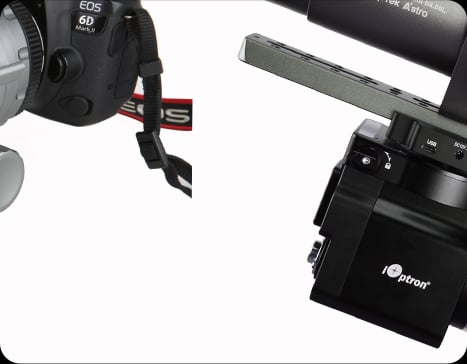
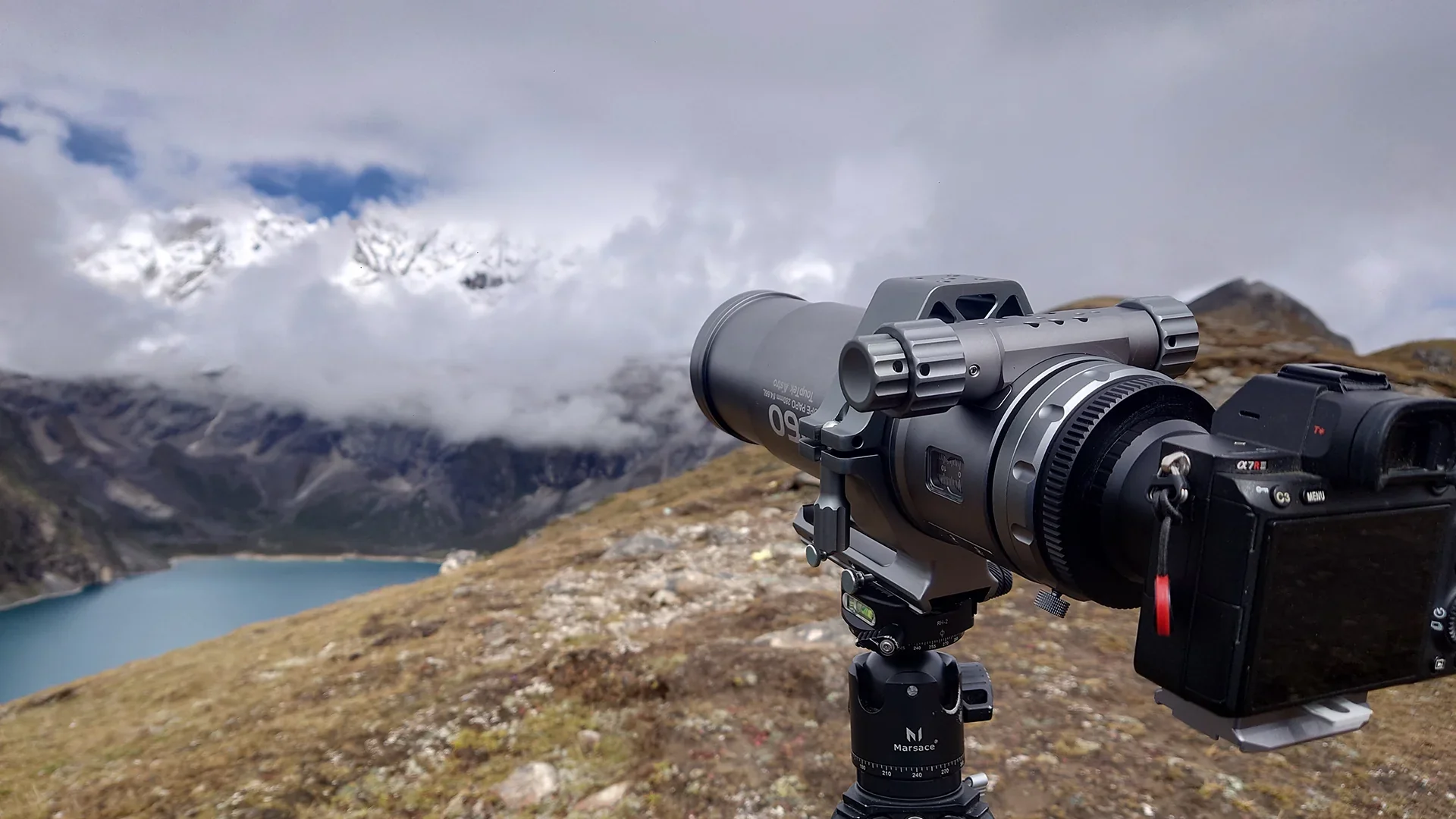
Compatible with DSLR/mirrorless cameras, instantly transforming into a professional telephoto lens
-
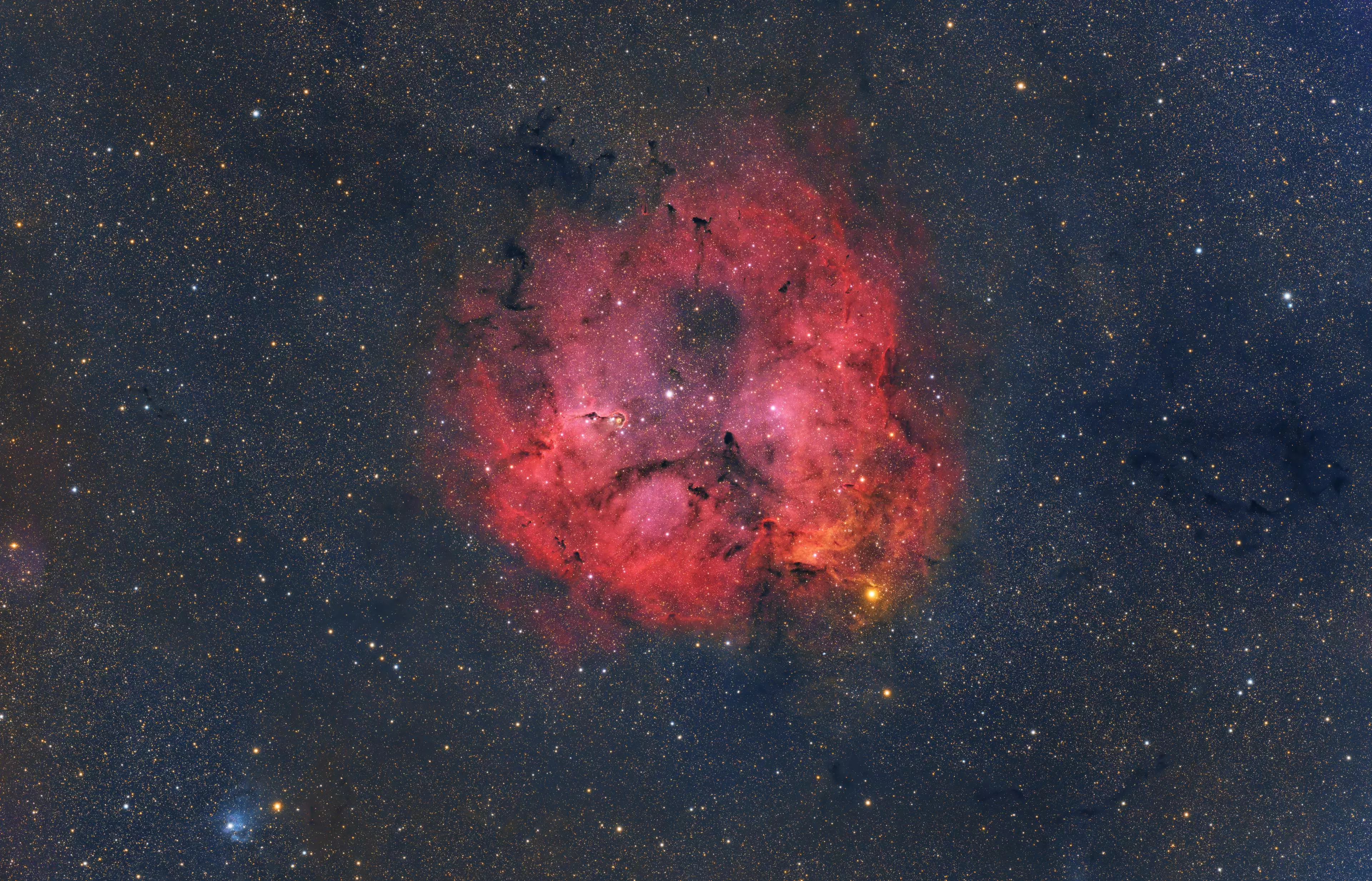
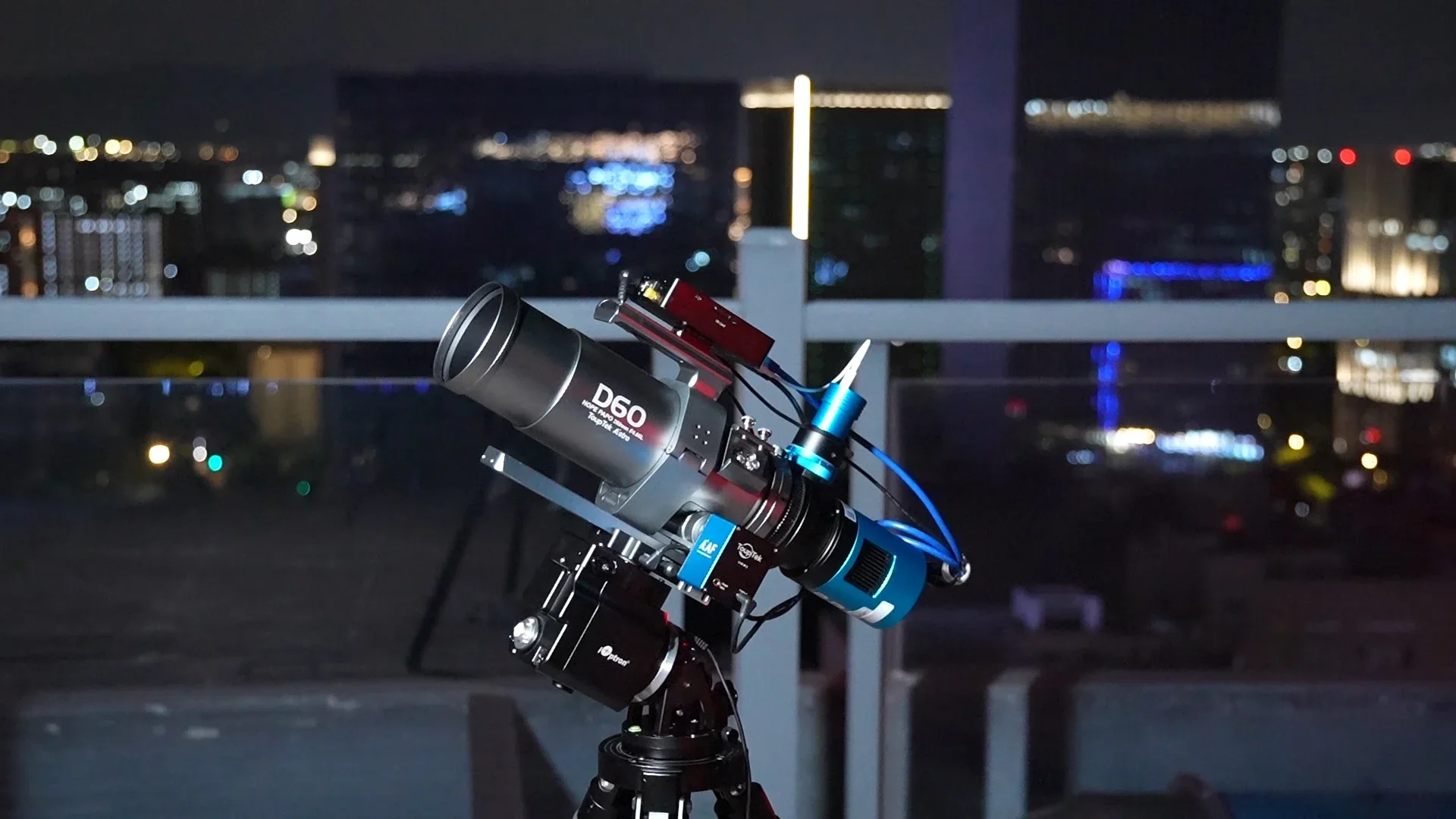
Connect to an astronomical camera to become a powerful tool for deep-sky astrophotography
-
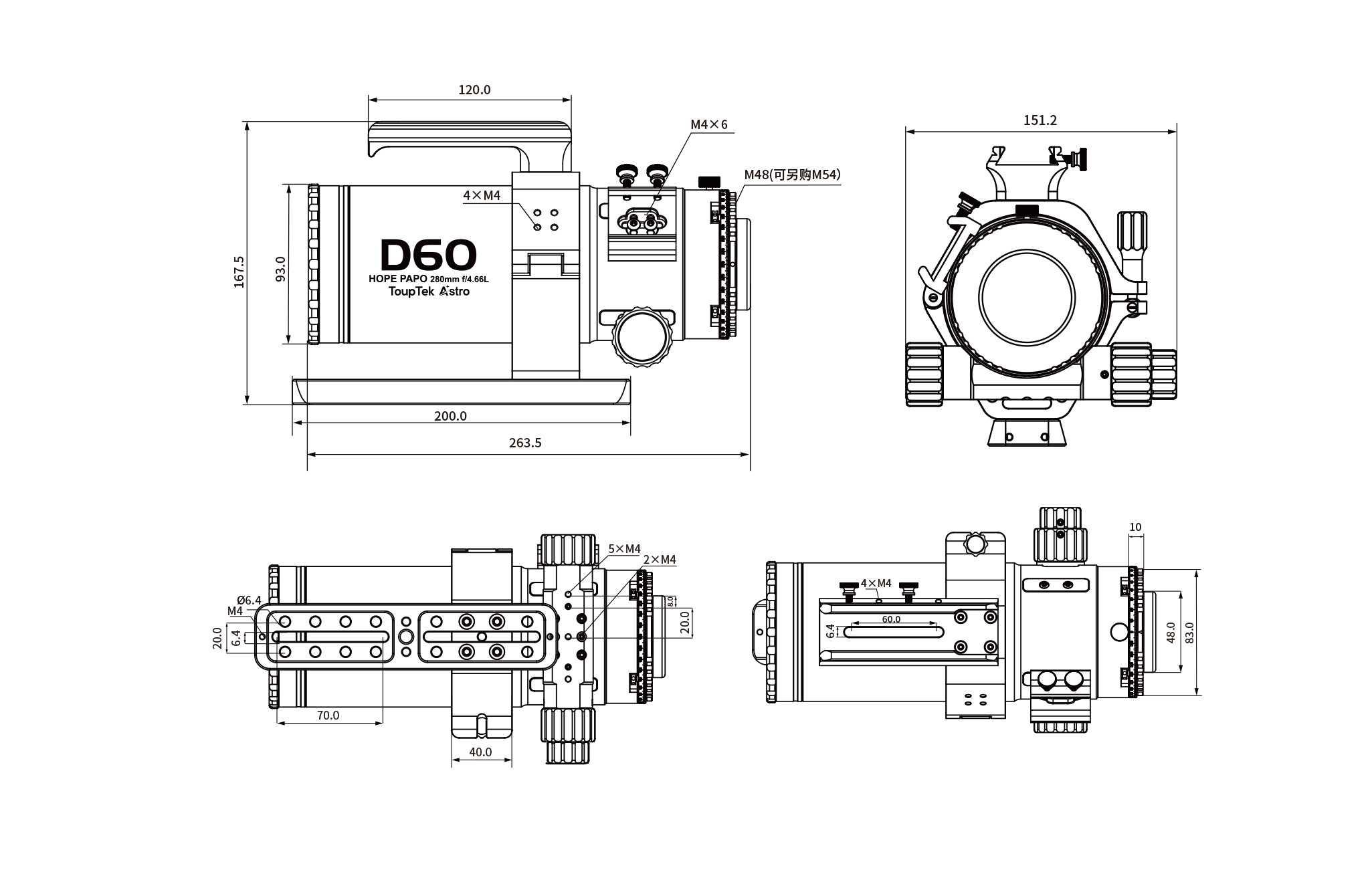
Dimensions
Contenu du coffret
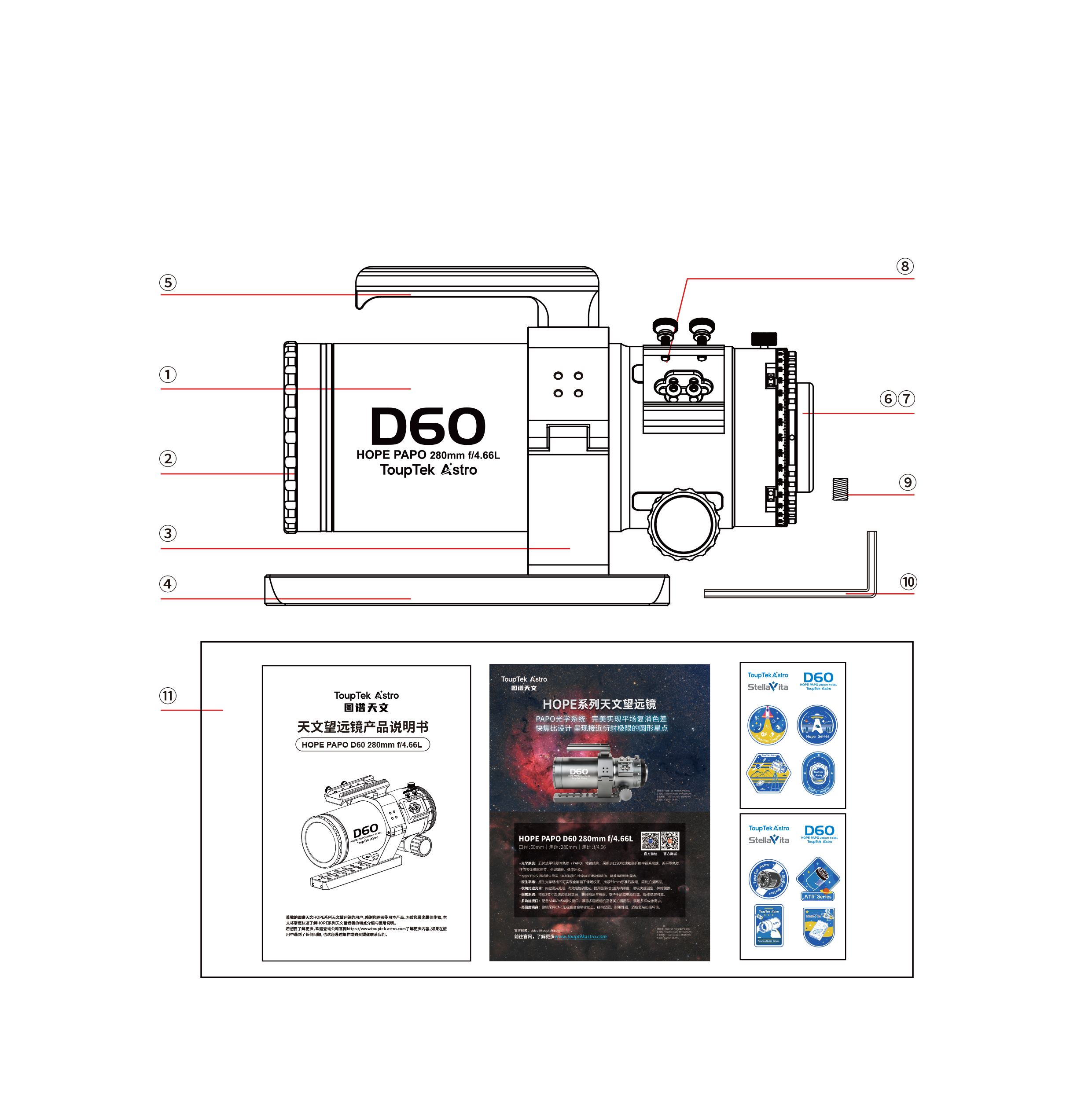
- ① OTA Tube × 1
- ② Front Lens Cap × 1
- ③ Telescope Tube Ring × 1
- ④ Dovetail Plate × 1
- ⑤ Handle × 1
- ⑥ M48×0.75 Male Adapter × 1 (Standard) / M54×0.75 Adapter × 1 (Optional)
- ⑦ M48-M Metal Dust Cover × 1 (Standard) / M54-M Dust Cover × 1 (Optional)
- ⑧ Dovetail Rail × 1
- ⑨ 3/8" to 1/4" Threaded Insert × 1
- ⑩ Hex Wrench × 3
- ⑪ Paper Information Package × 1 (user manual, leaflets, stickers, etc.)
Images réalisées par les utilisateurs
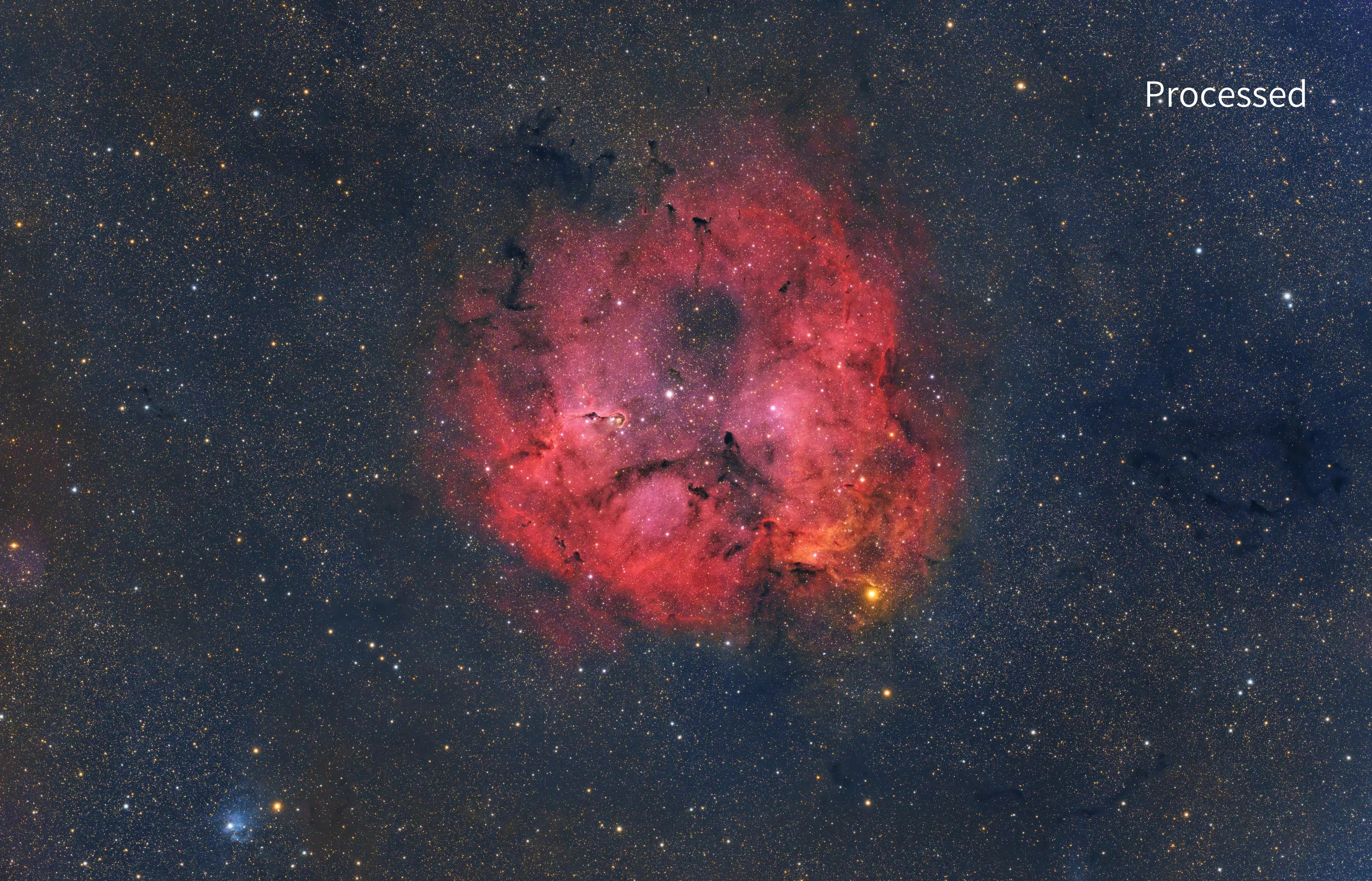
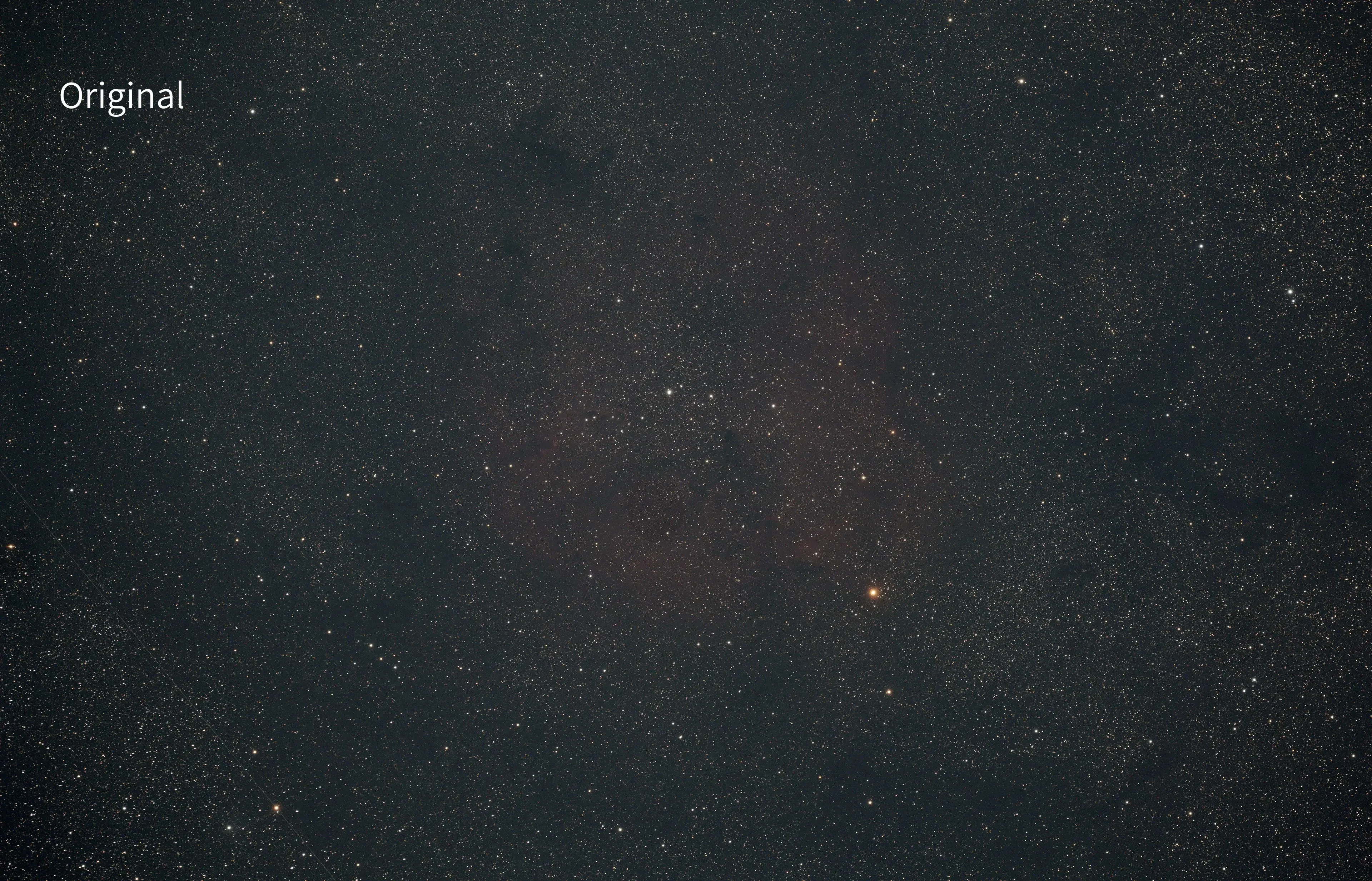
- Telescope: ToupTek Astro HOPE D60
- Guide Camera: ToupTek Astro G3M678C
- Main Camera: ToupTek Astro SkyEye62AC
- Mount: iOptron CEM70
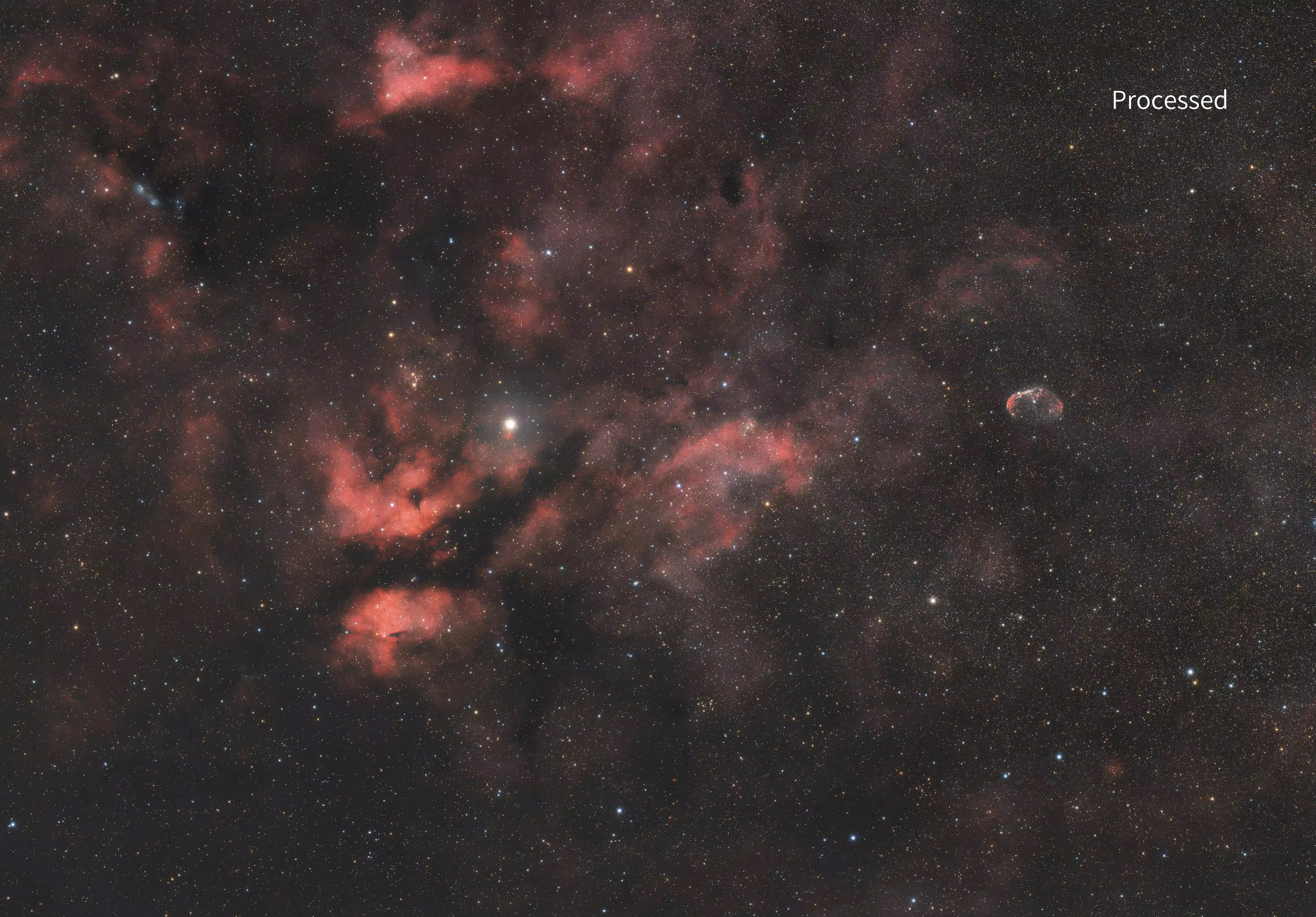
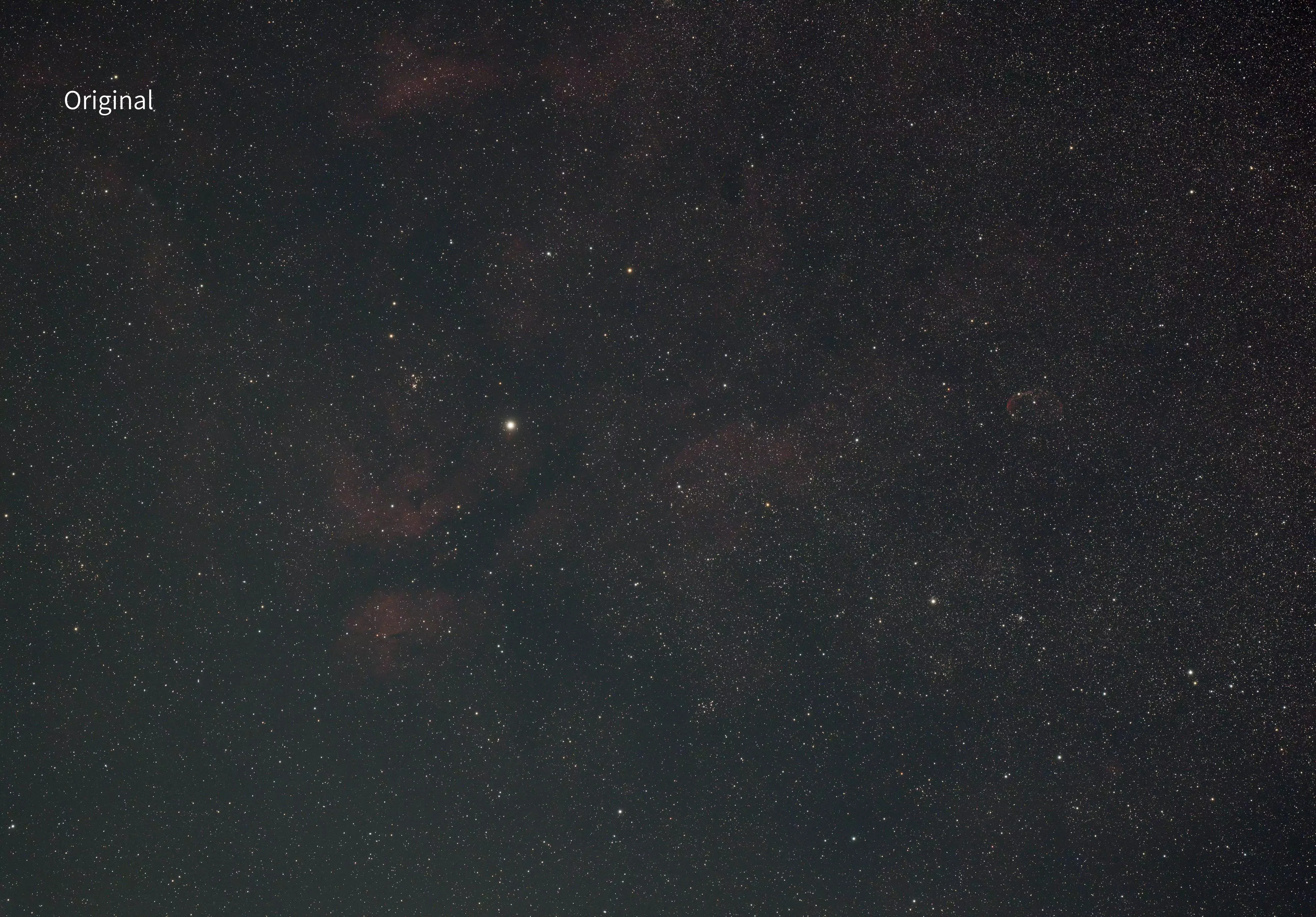
- Telescope: ToupTek Astro HOPE D60
- Guide Camera: ToupTek Astro GPM462M
- Main Camera: ToupTek Astro SkyEye62AC
- Mount: iOptron HAE43C
- Astrophotography Controller: ToupTek Astro StellaVita
Expérience d’astrophotographie tout-en-un Simplifie l’imagerie et rend l’astrophotographie plus accessible au bout des doigts
Lettre d’information
Abonnez-vous aux actualités ToupTek Astro
Recevez directement nos avis d’experts, lancements de produits et mises à jour importantes.