As the holiday season brings to mind shimmering lights and celebratory decorations, there is no better celestial counterpart than the Christmas Tree Nebula. Also known as NGC 2264, this fascinating nebula is a vibrant accumulation of cosmic dust and gas that plays a critical role in the birth of stars. Located in the Monoceros constellation, approximately 2,600 light-years from Earth, this nebula is a stellar nursery that lights up the winter night skies with its festive glow.
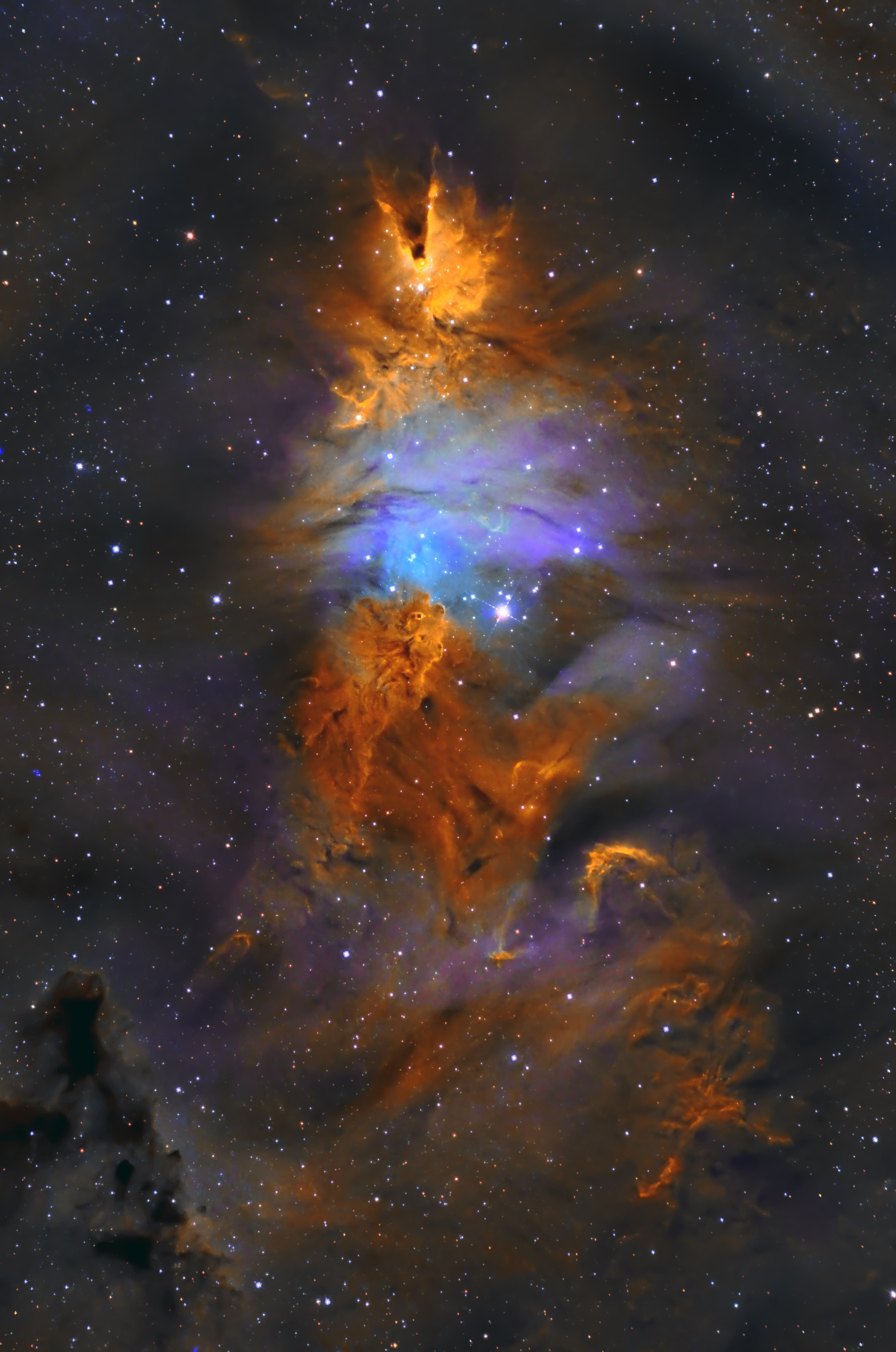
- Photographer: Klyress
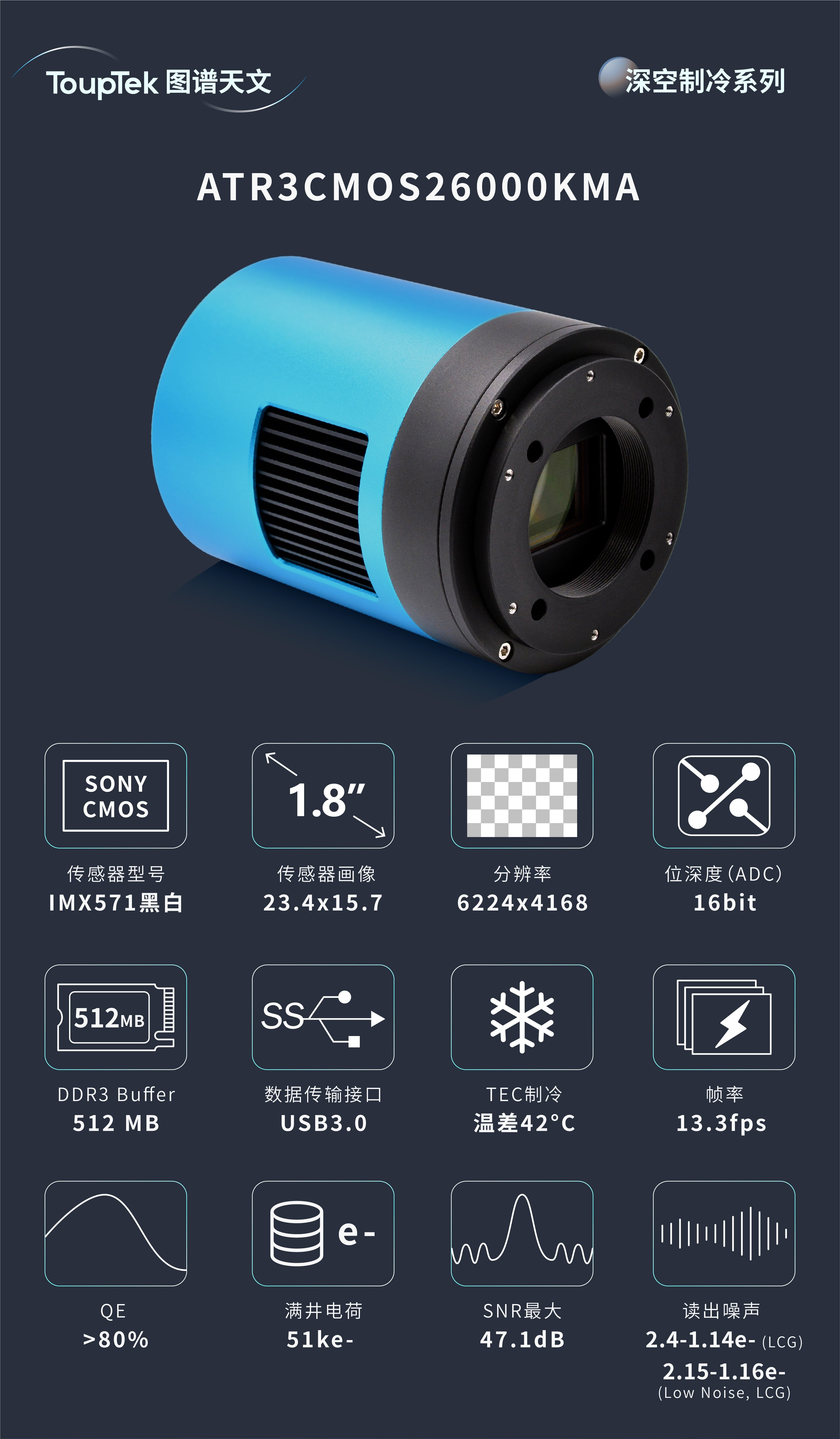
- Camera: ToupTek ATR3CMOS26000KMA
- Telescope: Optolong SHO 3nm
- Equatorial Mount: Skywatcher 150P/F5, HEQ5 Pro
- Shooting Parameters: Gain 100, Offset 30, H 50x5min, S 50x5min, O 50x5min
The Christmas Tree Nebula
The Christmas Tree Nebula, NGC 2264, comprises both an emission nebula and a dark nebula. At its heart is a cluster of young, hot stars, whose stellar winds and radiation illuminate the surrounding gas. The nebula gets its name due to the characteristic shape of its gas cloud, which resembles a Christmas tree when viewed in the infrared spectrum, with the Cone Nebula forming the apex or the "tip" of the tree.
A Region of Star Formation
NGC 2264 is a region abundant with interstellar material prime for star formation. Within the nebula, protostars are taking shape through the gravitational collapse of dust and gas that heat up and eventually ignite nuclear fusion to form new stars. The festive moniker of the nebula is a charming nod to its fertile properties, birthing stars akin to the gifts nestled under a Christmas tree.
The Cone Nebula
The Cone Nebula, a part of the Christmas Tree Nebula, is a dark pillar of dense gas and dust. It acts as a stellar incubator, shielding nascent stars from harsh stellar radiation. The Cone Nebula is difficult to capture due to its dimness, but in long-exposure images, its conical shape becomes readily apparent, much like a shadowy, cosmic pinnacle.
Imaging NGC 2264
Capturing the splendor of NGC 2264 is a challenge for astrophotographers. Amateurs and professionals alike aim to detail the intricate luminosity and complex textures within the nebula. Using narrowband filters such as H-alpha, SII, and OIII can highlight particular features and wavelengths emitted by specific ionized elements.
Conclusion
The Christmas Tree Nebula, NGC 2264, remains a source of wonder and beauty, enriching our knowledge of star formation and the vast complexities of interstellar media. Its holiday-themed visage inspires amateur astronomers to peer into the heavens and professional scientists to continue unraveling cosmic secrets.